The Last Laugh (1924)
An aging hotel doorman's gold-braided uniform is the whole of his pride and standing in his tenement neighborhood, so when he is demoted to washroom attendant, the quiet humiliation unravels his life, until an outlandish inheritance turns the story around.
The Last Laugh tells almost its entire story without a single intertitle, leaning instead on Karl Freund’s revolutionary “unchained camera” — mounted on bicycles, cranes, and the cameraman’s own chest — to carry the emotion, a technical leap that Hollywood studios studied and imported within the year.
Background
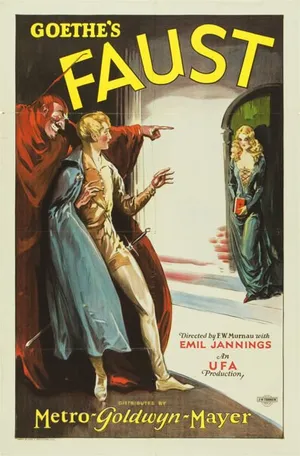
Emil Jannings plays a proud hotel doorman in this film, the work of Murnau and screenwriter Carl Mayer. It belongs to the German “chamber drama” tradition, in which small domestic tragedies are told with a minimum of characters. It was made without intertitles in the usual sense: there is a single title card near the end, apologising for the happy epilogue.
What to watch for
Karl Freund’s camerawork is the star. He strapped the camera to his chest and walked through a crowd, mounted it on a bicycle and sent it down a lift, and let it sway to suggest drunkenness in the doorman’s dream sequence. Hollywood took notice, and Freund went on to shoot Metropolis and Dracula. Jannings’s performance, in which his body language does all the talking, is among the best of the silent era. Watch for the moment when the coat is taken from him; the rest of the film follows from that.