Sunrise (1927)
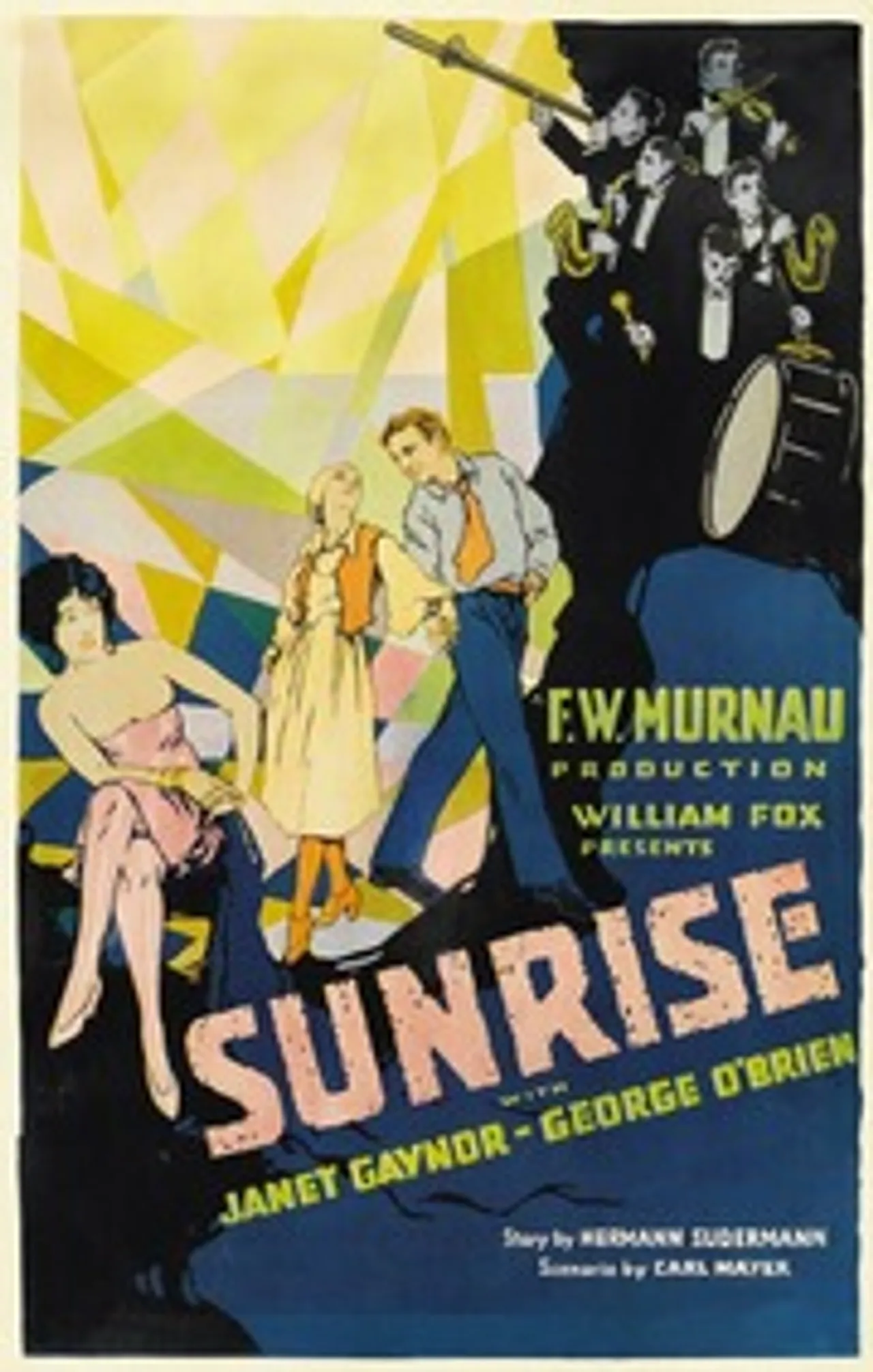
A farmer, seduced by a visiting city woman into a plan to drown his wife, loses his nerve at the last moment; the pair then rediscover their love across a redemptive day in the city before tragedy threatens their journey home.
Sunrise was F. W. Murnau’s first American film, and its expressionist camerawork, moving sets, and use of the new Fox Movietone sound-on-film system made it one of the most technically influential films of the silent era. At the first Academy Awards, it won the only competitive award ever given for Unique and Artistic Production.
Background
Fox invited Murnau to Hollywood and gave him almost unlimited resources. The film is subtitled “A Song of Two Humans” and was adapted from a Hermann Sudermann story by Carl Mayer, who also wrote The Last Laugh. At the first Academy Awards it won for Unique and Artistic Production, and Janet Gaynor won Best Actress for her work in this and two other films; the cinematographers Charles Rosher and Karl Struss won for cinematography.
What to watch for
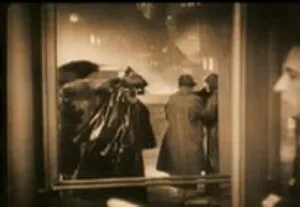
The city sequences were shot on an enormous built set with forced perspective, and the camera moves constantly: it follows the husband through a marsh at night, glides through a crowded street, and drifts across a fairground. Watch for the way the film uses double exposure to show emotion, such as the city woman’s presence looming over the husband. The synchronized score and sound effects came from the Fox Movietone system, so the film is a silent picture with a soundtrack. Murnau died in a car accident in 1931, and Sunrise is his masterpiece.