The Last Command (1928)
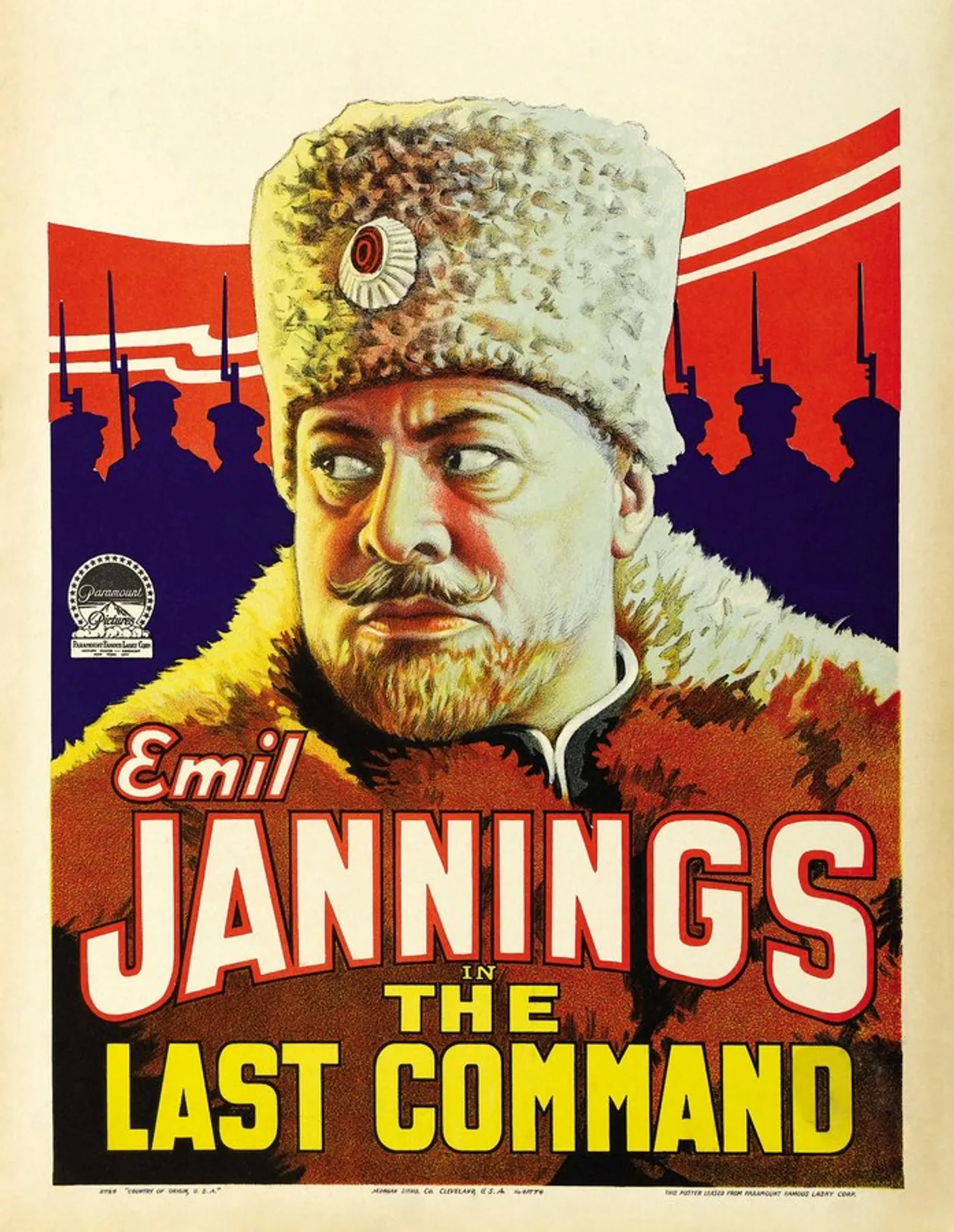
A former Imperial Russian general, now a broke Hollywood extra with a nervous tremor, is hired to play a general in a war picture directed by a revolutionary he once had flogged. Most of the film flashes back to 1917 and the woman caught between the two men.
Reportedly sparked by a real anecdote passed to the studio by Ernst Lubitsch, The Last Command helped win Emil Jannings the first Academy Award for Best Actor and stands among Josef von Sternberg’s finest silent films; it entered the National Film Registry in 2006.
Background
The Last Command was directed by Josef von Sternberg and stars Emil Jannings as a former Imperial Russian general who ends up working as a Hollywood extra. Jannings won one of the first Academy Awards for Best Actor for his performance. The story is reportedly based on an anecdote that Ernst Lubitsch passed along to the studio, and William Powell, who was then still building his career, appears in the cast. The film entered the National Film Registry in 2006, and it is widely regarded as one of Sternberg’s finest silent films. It is in the public domain because its copyright term has expired.
What to watch for
Watch the way the film moves between Hollywood and Russia. Most of the story is a flashback to 1917, and the two timelines mirror each other, with the broken general acting in a picture directed by a revolutionary he once had flogged. Jannings’s nervous tremor and the restrained style of his performance are central to the film’s effect, and Sternberg uses lighting and framing to make Hollywood’s artifice and the wartime past feel equally uneasy. At 89 minutes it is a substantial silent, so pay attention to the transitions between the two timelines, which carry much of the film’s meaning.