The Docks of New York (1928)
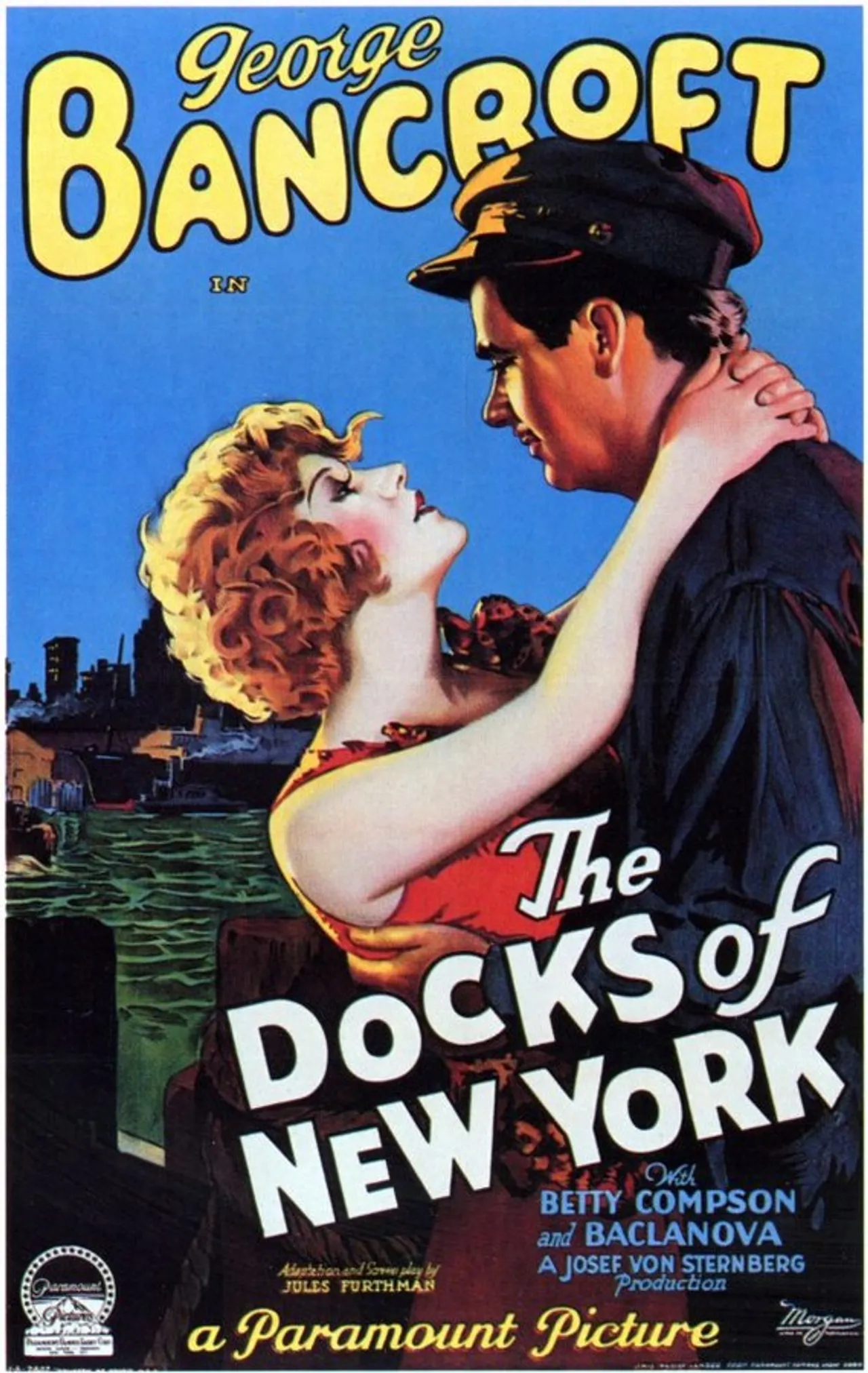
A ship's stoker on shore leave rescues a suicidal woman from the East River and marries her on a drunken whim; when he tries to skip out the next morning, a change of heart pulls him back to face what he owes her.
The Docks of New York is often called the last great achievement of the American silent film, its fog-shrouded waterfront sets and tender pacing a high point of Josef von Sternberg’s collaborations with George Bancroft. It joined the National Film Registry in 1999.
Background
Josef von Sternberg directed The Docks of New York, a silent drama starring George Bancroft as a ship’s stoker and Betty Compson as a woman he rescues from the East River. Released in 1928, the film is often counted among the most visually striking late silents, and it was made largely on studio sets built to suggest waterfront streets and bars. Bancroft’s character marries the woman on a drunken whim, and when he tries to leave the next morning, a change of heart pulls him back. Von Sternberg used the film to develop the strong contrasts of light and shadow that became his signature.
What to watch for
Pay attention to the lighting, which uses heavy shadows and sharp contrasts to build the atmosphere of the waterfront. Von Sternberg’s camera moves through crowded bars and streets, and the film’s sense of place comes largely from these images. Bancroft’s performance is rough and physical, which suits the stoker’s character. The main turn of the story comes the morning after the wedding, when a sudden decision reshapes the rest of the film. Compare the framing and shadows with other late silent dramas to see how distinct von Sternberg’s style was at this stage of his career.