Big Business (1929)
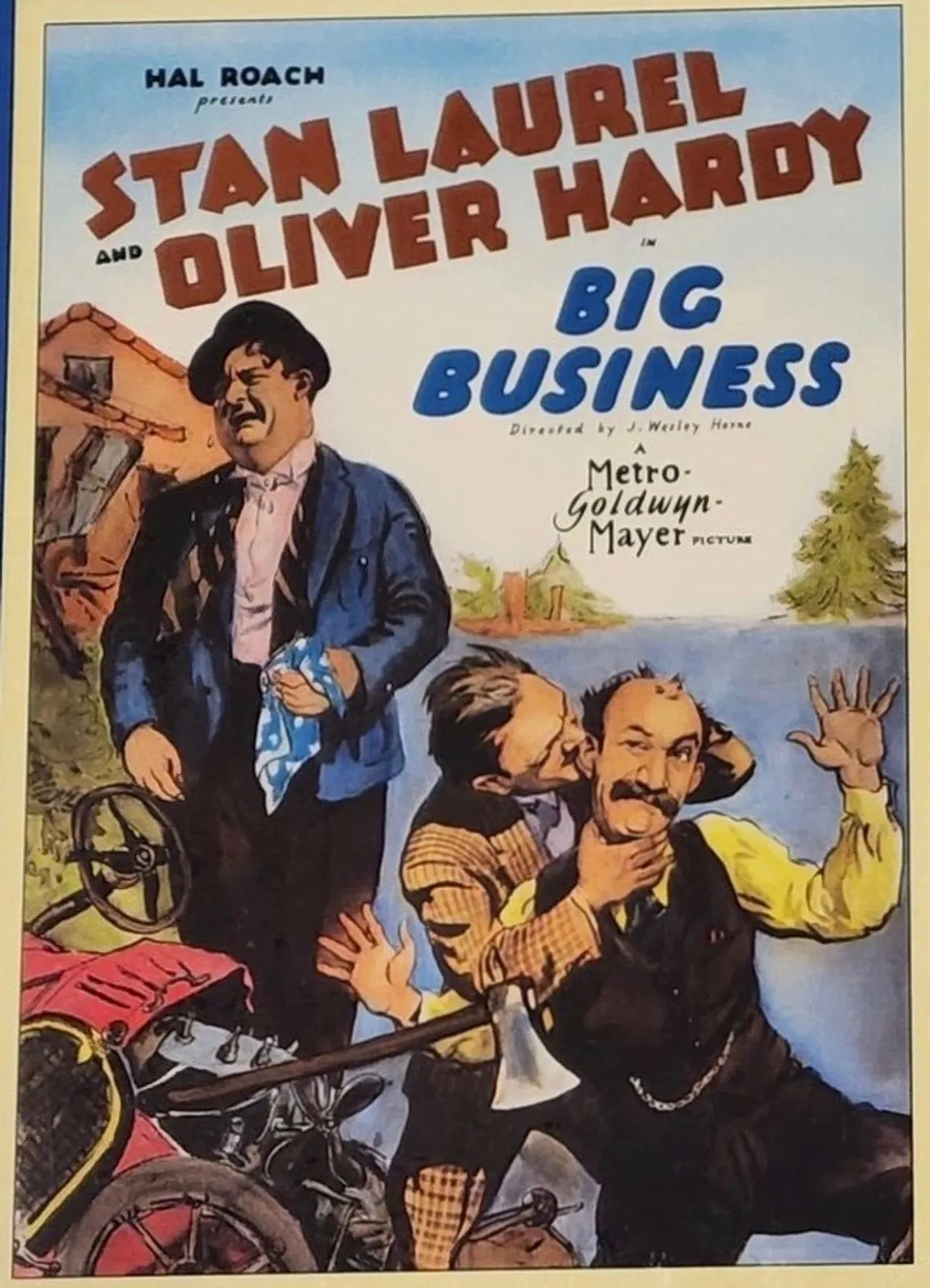
Two door-to-door Christmas tree salesmen pick the wrong customer on a sunny California street. A trivial disagreement spirals into a methodical spree of vandalism as the homeowner dismantles their car while the pair take his house apart piece by piece.
Frequently ranked among the greatest short comedies ever made, Big Business is the purest demonstration of Laurel and Hardy’s principle of “reciprocal destruction,” escalated with almost ceremonial patience. It is preserved in the National Film Registry.
Background
James W. Horne directed Big Business for Hal Roach Studios in 1929, one of the Laurel and Hardy short comedies that made the pair a major attraction. The film is generally ranked among their best silent-era shorts and is preserved in the National Film Registry. Stan Laurel and Oliver Hardy play door-to-door Christmas tree salesmen, and Jimmy Finlayson is the homeowner whose dispute with them escalates into the destruction of both his house and their car. The short is a central example of the pair’s style of escalating mutual damage, which they called reciprocal destruction.
What to watch for
The film is built on a single escalating idea, with each side answering the other’s damage with more of its own. The pacing is deliberately patient, and the final destruction arrives only after a long build. Watch the timing of Laurel and Hardy’s reactions, which often get bigger in silence than any line could. Finlayson’s stubborn homeowner is the perfect foil, and the Christmas setting gives the cartoonish violence an odd festive edge that makes the escalation funnier as the house comes apart piece by piece.