Steamboat Bill, Jr. (1928)
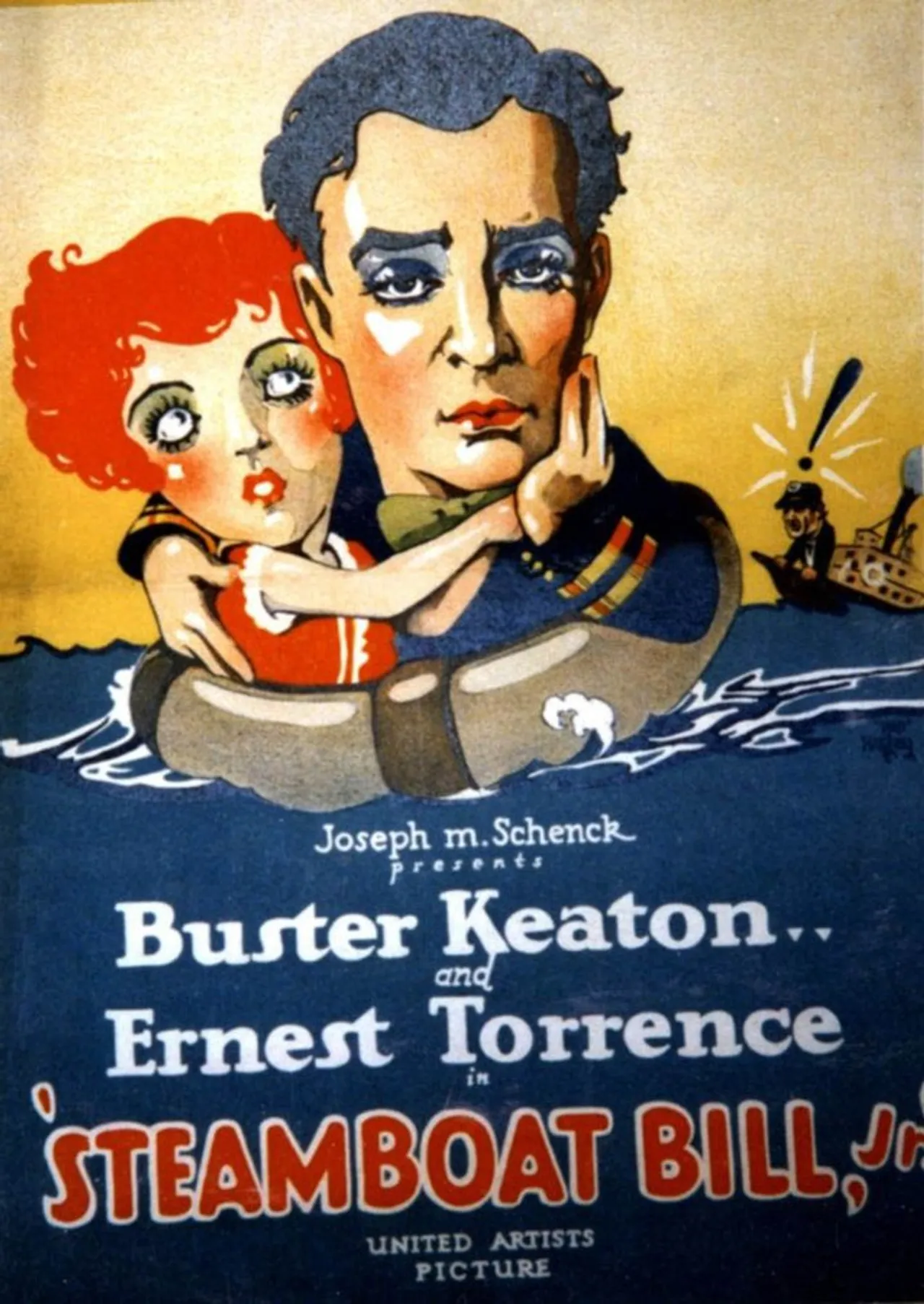
A dandified college graduate returns to help his gruff riverboat-captain father, falling for the daughter of his father's business rival along the way; when a cyclone tears through town, he must rescue everyone he loves.
Steamboat Bill, Jr. is Buster Keaton’s last independently produced feature and home to what may be his most famous stunt: a two-ton house facade collapsing around him with only an open window’s width to spare. Though credited solely to Charles Reisner, Keaton co-directed much of it uncredited, and the film entered the National Film Registry in 2016.
Background
Steamboat Bill, Jr. was the last feature Buster Keaton made through his own independent production arrangement before moving to MGM, where he would have far less creative control. Although Charles Reisner received sole director’s credit, accounts from the production describe Keaton directing much of the physical comedy himself, as was common practice on his independent films. The story follows a dandified college graduate trying to prove himself to his gruff riverboat-captain father.
What to watch for
Watch for the film’s climactic cyclone sequence, built around a series of elaborate and dangerous physical gags, including the famous shot of a building’s two-story facade falling around Keaton while he stands untouched in the path of an open window. The stunt required exact positioning and carried real risk, and it has been cited by later filmmakers as one of the most impressive practical effects of the silent era. The film’s commercial failure on release, overshadowed by other comedies that year, has not stopped it from being reassessed since as one of Keaton’s best.