Fear and Desire (1953)
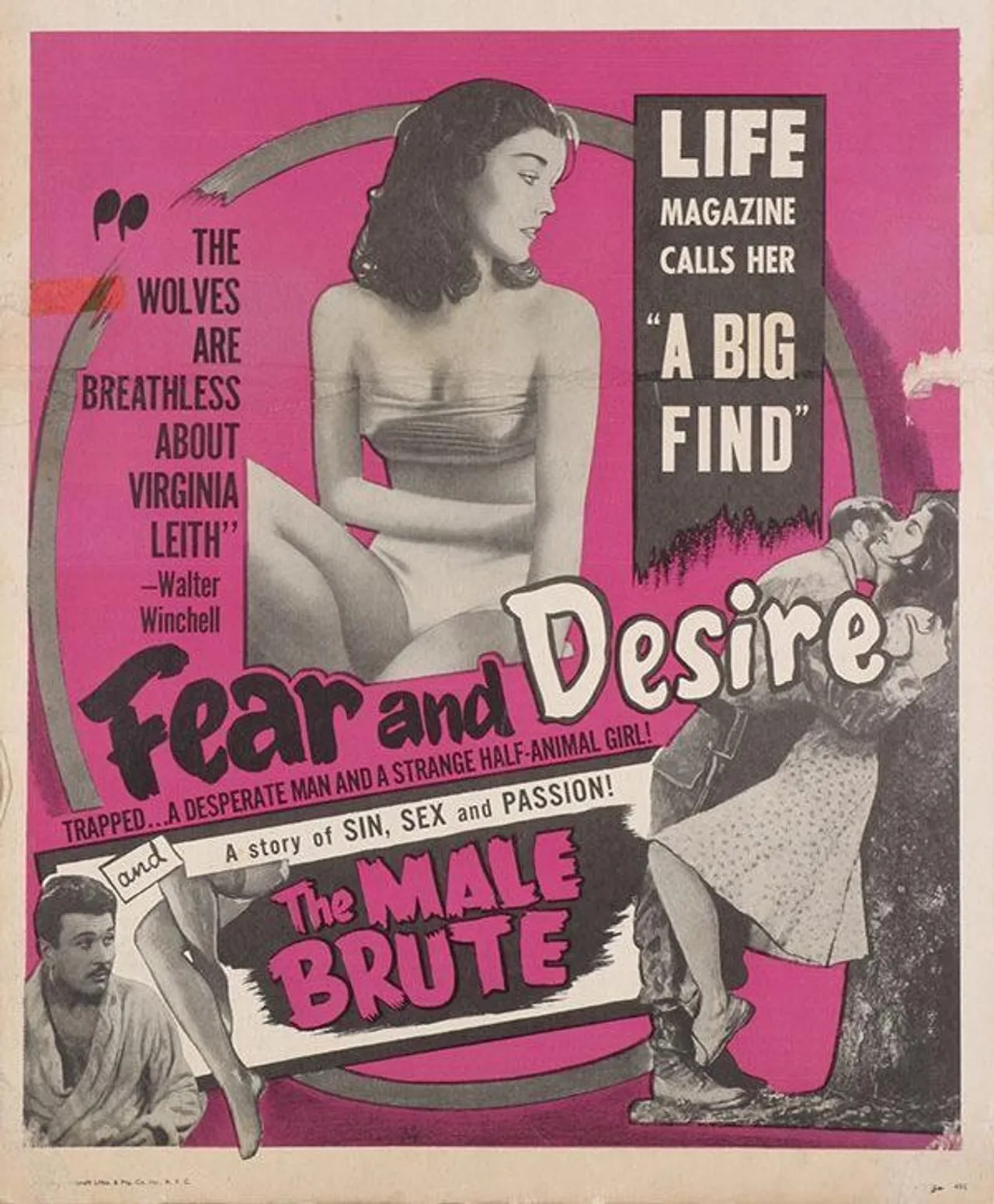
Four soldiers whose plane has gone down behind enemy lines pick their way back toward friendly territory through a forest that belongs to no nameable war. They take a peasant girl prisoner, one of them breaks down and kills her, and the survivors stake their escape on assassinating an enemy general.
Stanley Kubrick’s feature debut, made at 24 on money borrowed from relatives with a crew of a handful, from a script by Howard Sackler. Kubrick came to regard Fear and Desire as a clumsy student effort and spent decades trying to keep it out of circulation; its copyright was never renewed, and later archival restorations have not changed its public-domain status.
Background
Fear and Desire is the first feature Stanley Kubrick directed, made independently outside the studio system with money borrowed from family and friends. Kubrick wrote none of the dialogue himself; the screenplay came from Howard Sackler, a childhood friend who later won a Pulitzer Prize for the play The Great White Hope. Kubrick later disowned the film, calling it amateurish, and spent much of his career trying to keep prints out of circulation.
What to watch for
Approach it as an early sketch of ideas Kubrick returned to later: soldiers stripped of context in a war that is never named, and the moral weight of violence carried out by ordinary men. The film’s low budget shows in its stagey performances and limited locations, but the visual compositions already hint at the control Kubrick would bring to his later work. It is most interesting as a historical document of a major director’s beginnings rather than as a fully achieved film in its own right.