Romance Sentimentale (1930)
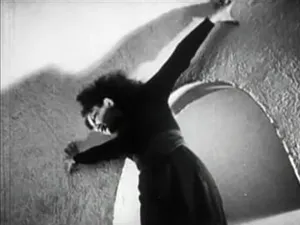
A visual tone poem built around a woman singing a wistful Russian ballad in a Paris parlor, intercut with crashing waves, wind-bent trees, drifting clouds, and rippling water that mirror the shifting moods of her song.
Romance sentimentale was made in Paris by Grigori Aleksandrov and Sergei Eisenstein, shot by their regular cinematographer Eduard Tisse during the trio’s years abroad after their Hollywood contract with Paramount fell through, financed by the pearl magnate Léonard Rosenthal; it stands as one of the first sound-film experiments by filmmakers otherwise defined by silent-era montage.
Background
Romance sentimentale was made in Paris by Sergei Eisenstein and his longtime collaborator Grigori Aleksandrov, with cinematography by Eduard Tisse, during a period when the three were traveling outside the Soviet Union after their Hollywood contract with Paramount fell through. It was financed by a wealthy patron and stands apart from Eisenstein’s famous work in silent montage as one of his rare, brief experiments with synchronized sound.
What to watch for
There is little conventional narrative here: the film pairs a woman singing a melancholy song with shots of natural imagery, water, wind, clouds, meant to echo the mood of the music. Watch for how the editing tries to translate a purely emotional, musical experience into images, an approach quite different from the political montage Eisenstein is best known for in films like Battleship Potemkin. It is a minor work, but an interesting look at a major director testing what sound could do.