Das Wandernde Bild (1920)

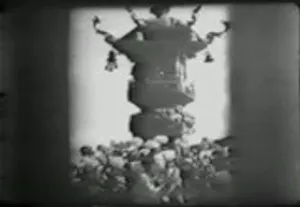
Irmgard Vanderheit becomes caught between two men bound together by an old family secret, played in a dual role by the same actor, as the story unfolds against alpine snowscapes and a recurring wayside shrine image that gives the film its title.
Made the year after Harakiri, Das Wandernde Bild is a lesser-known early Fritz Lang melodrama produced by Joe May’s studio, and this surviving print, a Portuguese-subtitled copy rediscovered in Brazil, is a reminder of how much silent-era German cinema survives today only through such scattered, incomplete foreign prints.
Background
Written by Fritz Lang and Thea von Harbou for producer Joe May’s studio and released December 25, 1920, Das Wandernde Bild (released in English as The Wandering Image) marked the start of Lang and von Harbou’s decade-long creative partnership, which would later shape Die Nibelungen and Metropolis. Mia May stars as Irmgard Vanderheit, who flees her violent husband John and, hiding in the mountains, meets a hermit who turns out to be John’s estranged twin brother Georg, her former love — both brothers played by Hans Marr in a dual role. John’s murderous pursuit triggers a rockslide that nearly kills them both, while Georg’s private vow to return to the world only when he sees a Madonna walking through the snow gives the film its title image.
What to watch for
The surviving print is itself part of the film’s story: only an incomplete copy survives, recovered in Brazil in 1986 with Portuguese intertitles, a common fate for German silents now known chiefly through such scattered foreign prints. Made the year after Lang’s Harakiri, the film finds him still working in a fairly conventional melodramatic register, before the stylization of his mid-1920s work, though Otto Hunte’s art direction and Guido Seeber’s cinematography already hint at the visual ambition to come. Watching Hans Marr move between the two brothers is also a reminder that dual-role trick photography was already a usable studio technique in German cinema of this period.