Joyless Street (1925)
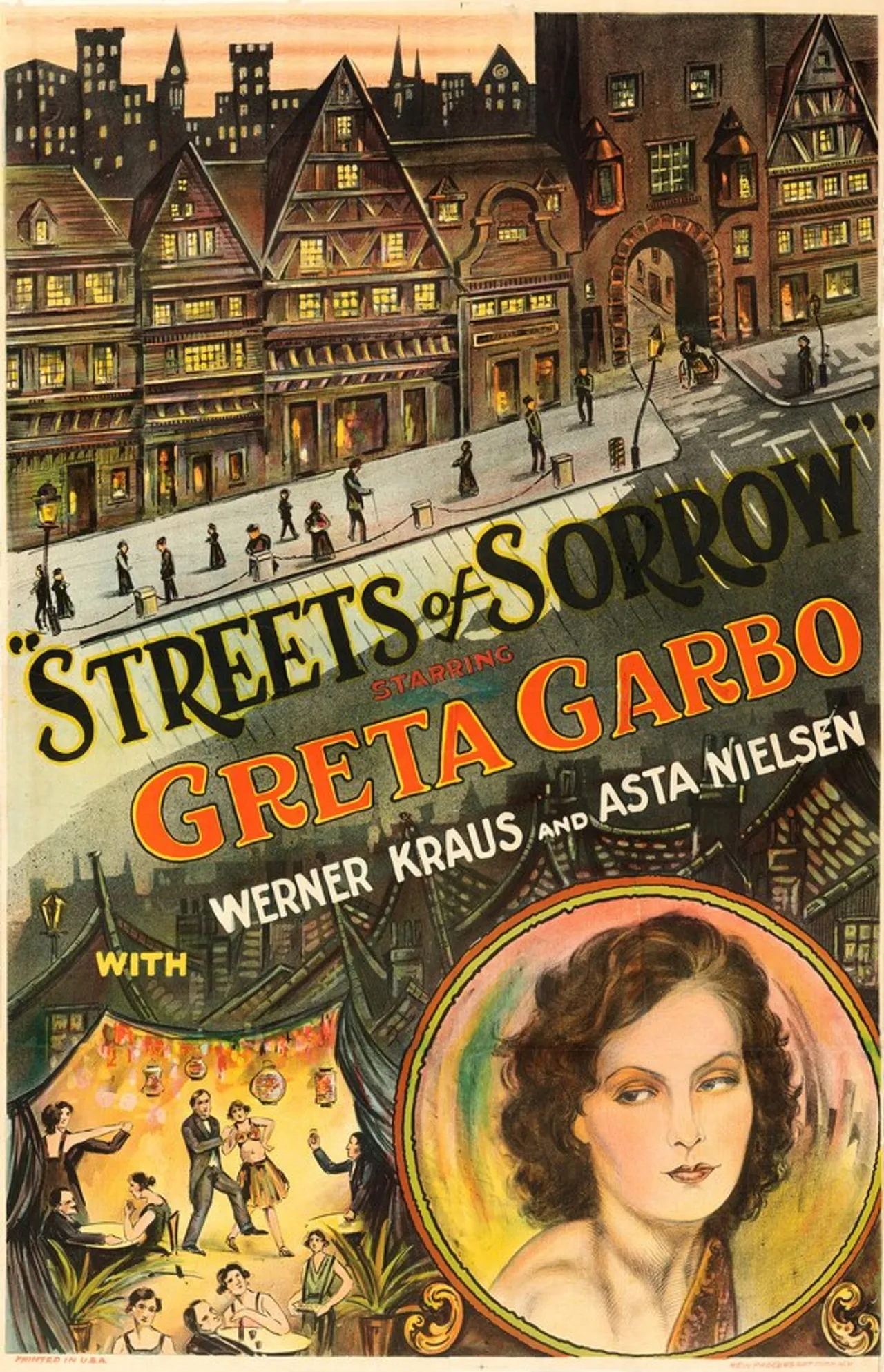
On one poverty-stricken Vienna street during the great postwar inflation, a butcher's shop line and a black-market speculator's schemes push two very different young women, one drawn toward a wealthy protector, the other toward the edge of prostitution, to the brink of ruin.
Joyless Street made Greta Garbo an international name and marked G.W. Pabst’s turn toward the unsentimental social realism of what critics would call New Objectivity, though censors carved the original two-and-a-half-hour cut down so aggressively in different countries that this surviving print represents only a fraction of what Pabst actually shot.
Background
Joyless Street was directed in Germany by G.W. Pabst and is set on a poor Vienna street during the postwar inflation. Greta Garbo’s performance brought her international attention and led to her move to Hollywood, and the film also features Asta Nielsen and Werner Krauss. Pabst’s film is a key work of German silent cinema, associated with the social realism of the period. The original cut ran to about two and a half hours, but censors in various countries cut it heavily, so surviving prints represent only part of what Pabst shot.
What to watch for
The film follows two young women whose lives are pushed toward ruin by the economic collapse, one drawn toward a wealthy protector and the other toward the edge of prostitution. Watch for Pabst’s depiction of the butcher’s shop line and the black-market schemes that shape the street’s daily life. The film’s unsentimental approach to poverty and its frank view of economic pressure are characteristic of the social realism that defined his work of the mid-1920s. Its sympathetic attention to working-class women makes it a notable film within Pabst’s career.