Battleship Potemkin (1925)
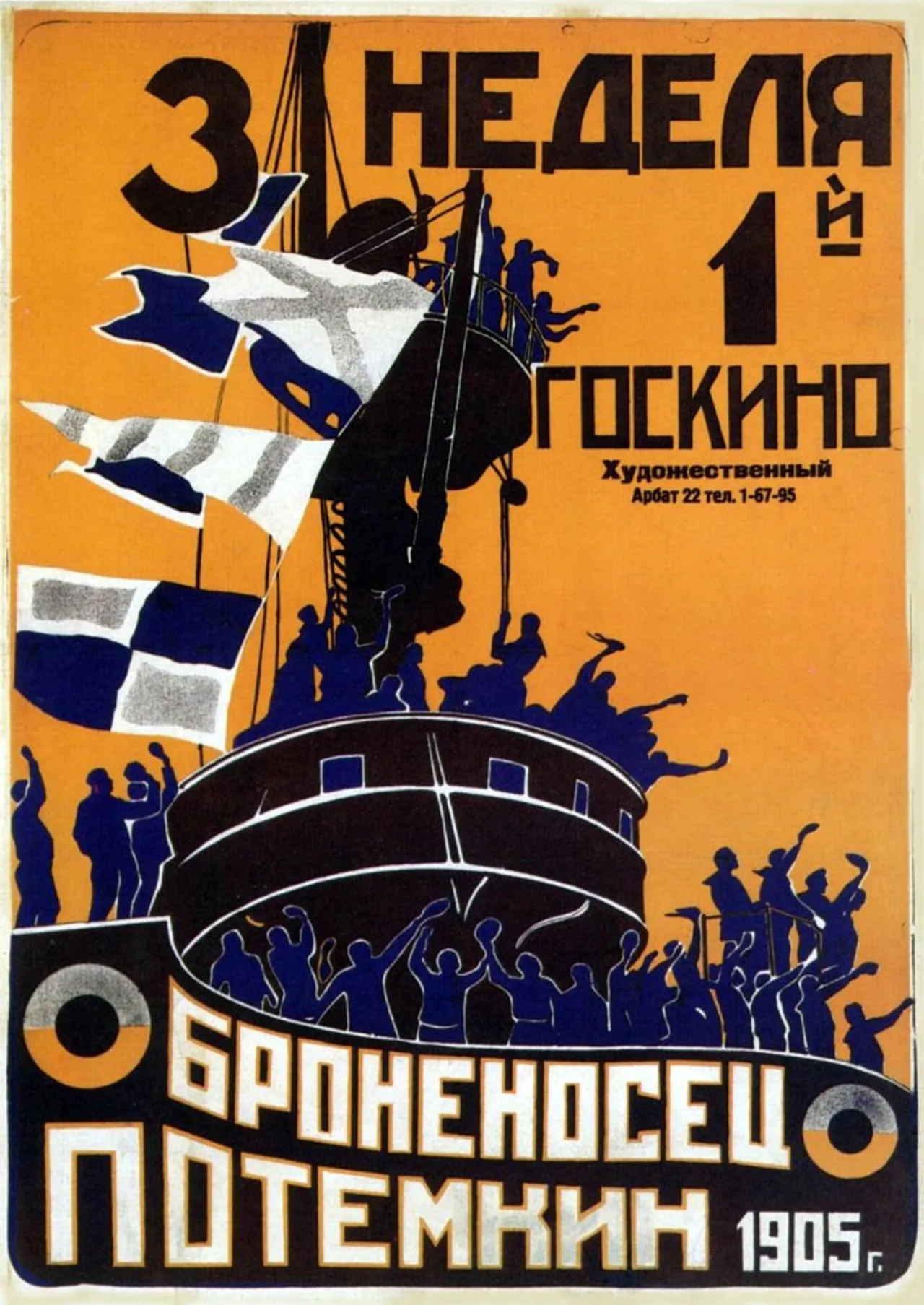
Sailors on a Tsarist warship revolt over maggot-ridden rations, the port of Odessa rises with them, and the army answers on the harbour steps. Eisenstein turns a 1905 mutiny into a furious lesson in montage, cutting rhythm and image until a pram rolling down stone stairs becomes the most copied minute in film history.
Propaganda built like a bomb. Ninety years on, the Odessa Steps still set the template for every crowd-versus-state sequence that followed.
Background
Eisenstein made Battleship Potemkin to commemorate the twentieth anniversary of the 1905 revolution. He divided it into five acts, and the film is famous for its use of montage, the editing of shots to create an effect greater than any single image. It was banned in several countries, including the United Kingdom for many years. In a poll held at the 1958 Brussels World Fair, film critics voted it the greatest film ever made.
What to watch for
The Odessa Steps sequence is the most celebrated part. Historians say that no such massacre took place on the steps, but the scene’s rhythm, the baby carriage and the faces of the crowd have been imitated by Brian De Palma in The Untouchables and by many others. The film was designed to move an audience, and it is a powerful piece of propaganda. Look for the hand-tinted red flag in some prints, and for the way Eisenstein turns the maggot-ridden meat into a symbol of injustice.