Vengeance Valley (1951)
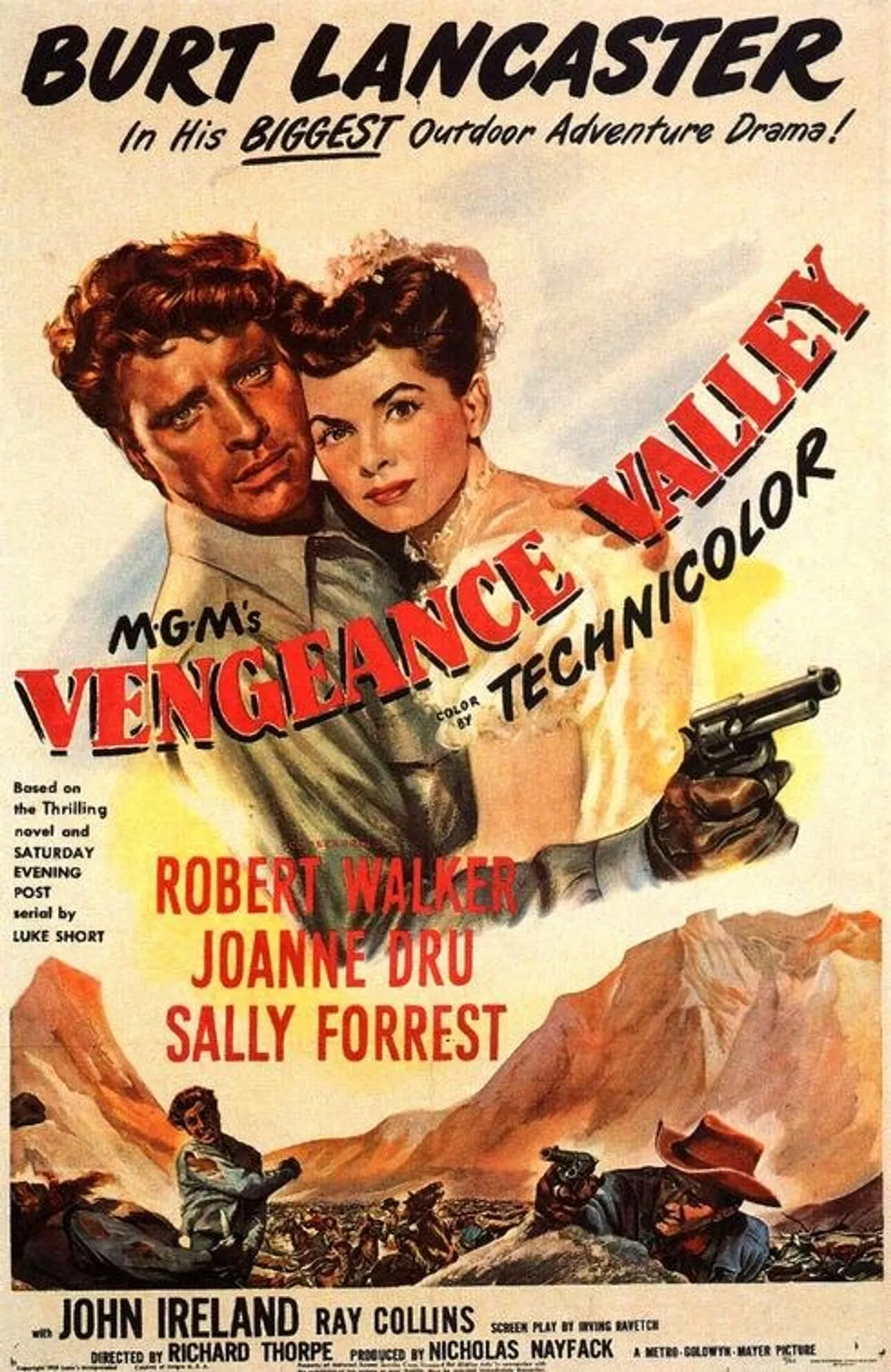
Ranch foreman Owen Daybright quietly takes the blame for fathering a hired hand's sister's child rather than expose the real father — his own foster brother — until the truth comes out and the brother conspires with her kin to have Owen killed on a roundup instead.
Adapted from a Luke Short novel and shot in Technicolor, Vengeance Valley was one of Robert Walker’s final screen appearances before his sudden death in August 1951, the same year the film was released.
Background
Vengeance Valley is a 1951 MGM Western directed by Richard Thorpe and adapted from a Luke Short novel. It was shot in Technicolor, and Burt Lancaster stars as Owen Daybright, a ranch foreman whose quiet sacrifice drives the plot. Robert Walker, who plays his foster brother, was among his final screen appearances before his sudden death in August 1951, the same year the film was released. John Ireland and Joanne Dru are also in the cast. The film runs about eighty-three minutes and is a representative example of the postwar MGM Western, with its color landscapes and romantic entanglements.
What to watch for
Look for the moral knot at the center of the plot, in which Owen takes the blame for a child that is not his in order to protect the real father, his own foster brother. The truth comes out, and the brother’s conspiracy with the woman’s kin to have Owen killed on a roundup brings the film’s violence to the surface. Lancaster is the anchor of the film, and his performance shows the restraint that marked his postwar work. The Technicolor landscapes give the film its look. Watching Walker’s performance now, viewers may be aware of how close it was to his death, which adds an additional layer to the film.