Traffic in Souls (1913)
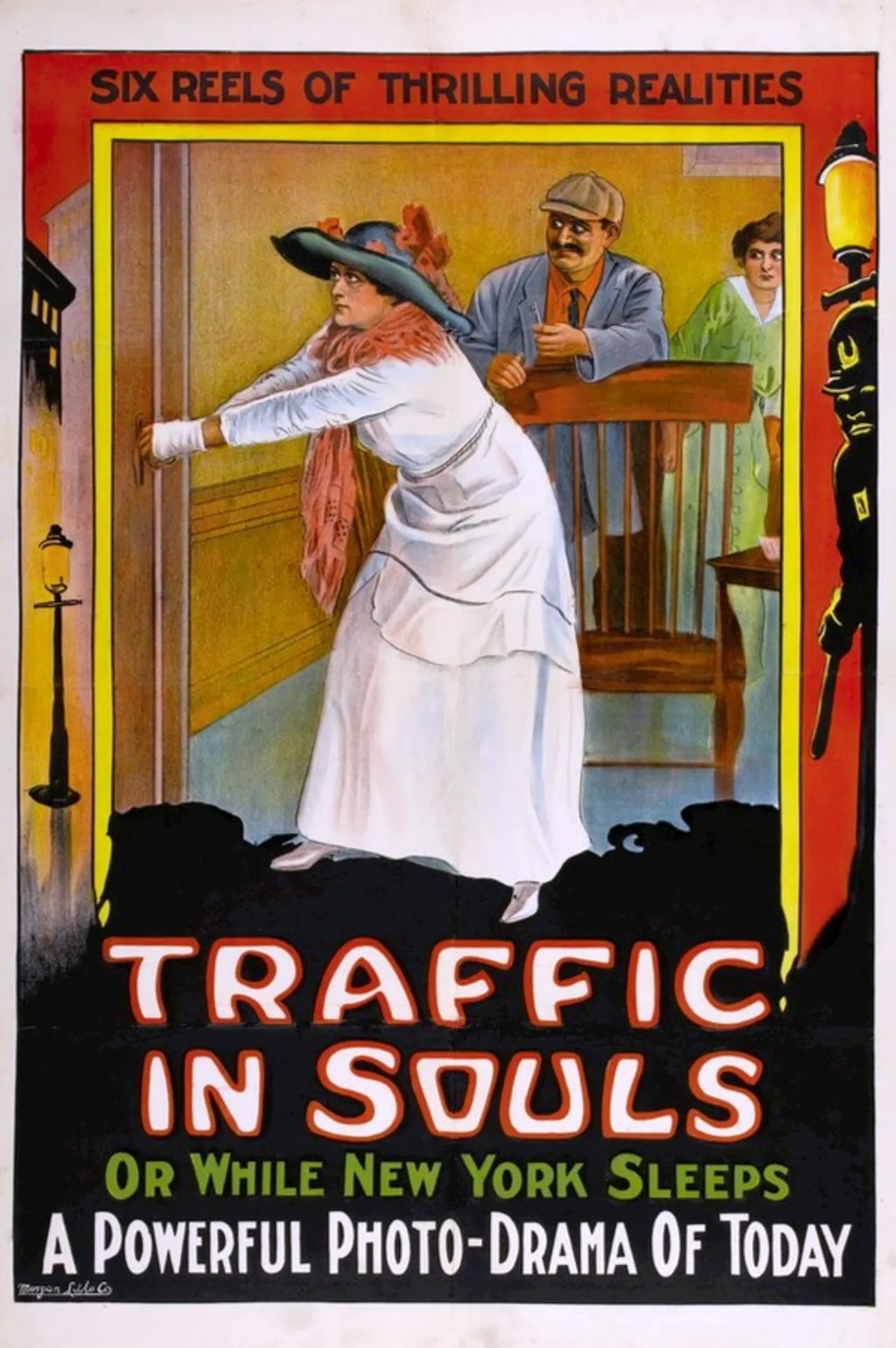
A young woman enlists her police-officer boyfriend to help her rescue her sister, who has been lured and trapped by a ring of traffickers posing as legitimate employers, exposing methods used to entrap women into the sex trade in early twentieth-century New York.
Made for a mere $5,700 and grossing roughly $450,000, Traffic in Souls capitalized on a nationwide panic over so-called “white slavery” and became one of the earliest American feature-length narrative films, helping establish Universal as a major studio. It entered the National Film Registry in 2006.
Background
Traffic in Souls is a 1913 silent feature directed by George Loane Tucker and released by Universal. It is one of the earliest American feature-length narrative films, and it was made amid a nationwide panic over so-called ‘white slavery.’ The film helped establish Universal as a major studio and was a commercial success for its time. It was selected for the National Film Registry in 2006. The story follows a young woman who enlists her police-officer boyfriend to help rescue her sister, who has been lured by traffickers posing as legitimate employers. The film runs about eighty-eight minutes.
What to watch for
Look for the film’s combination of documentary-style material and melodrama, which presents the traffickers’ recruitment methods alongside the rescue plot. The moral message is delivered through the investigation and the rescue structure, with the boyfriend’s police work driving the plot forward. The film’s sensational presentation of the subject reflects the moral panic that surrounded it, and modern viewers should keep that context in mind. Notice how the film uses its length to develop several threads at once, from the sister’s entrapment to the investigation and the eventual confrontation. Its early use of narrative editing shows the form’s growing ambitions in the period.