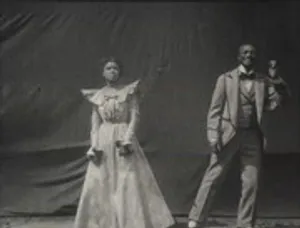
The Kiss (1896)
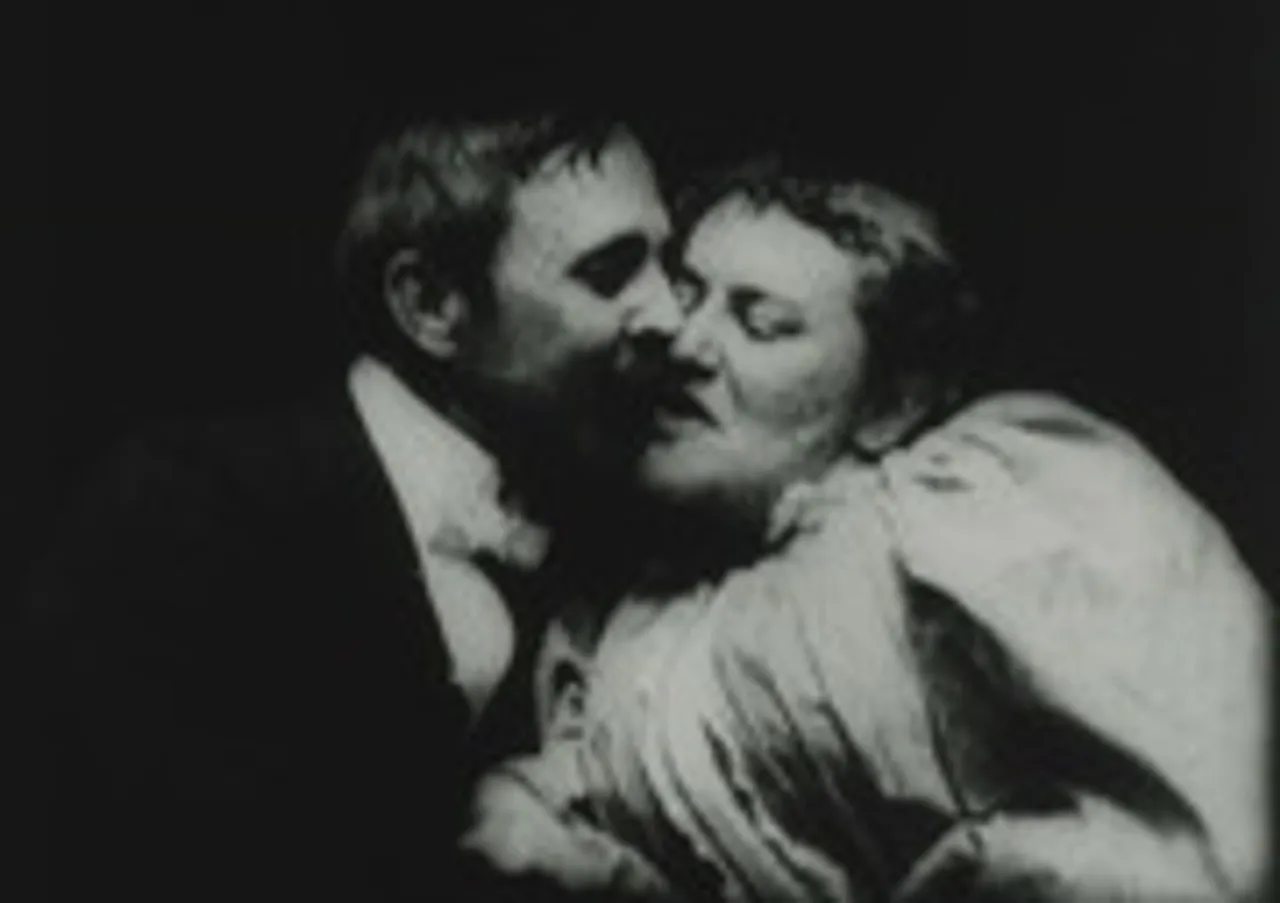
An eighteen-second close-up reenactment of the kiss from the Broadway musical The Widow Jones, with May Irwin and John Rice repeating their stage embrace for Edison's camera at the Black Maria studio.
The Kiss was among the very first films shown commercially to American audiences, and its enlarged, unblinking view of an ordinary embrace scandalized contemporary critics as indecent — an early flashpoint in the long history of anxiety over what the movies dared show. Preserved in the National Film Registry, it stands as a founding artifact of the film close-up itself.
Background
The Kiss is an eighteen-second film made in 1896 by William Heise at Thomas Edison’s Black Maria studio in West Orange, New Jersey. It reenacts a kiss from the Broadway musical The Widow Jones, with stage performers May Irwin and John Rice repeating their stage embrace for the camera. It was among the first films shown commercially to American audiences, and its enlarged view of an ordinary embrace drew objections from some critics and church groups who considered it indecent. The film is preserved in the National Film Registry and is often cited as an early example of the film close-up.
What to watch for
Watch the framing, which is close and held steady on the two faces, so the embrace fills the screen. The movement is brief, and the repeated kiss is the entire content, which made it startling to early audiences who were used to seeing performers at a distance. The image is grainy and the movement mechanical, the usual look of the Edison studio of the period, and that flatness adds to its strangeness now. The film runs under a minute, so the experience is brief, but its close view of affection makes it a useful starting point for thinking about the early history of the screen close-up.