The Great Train Robbery (1903)
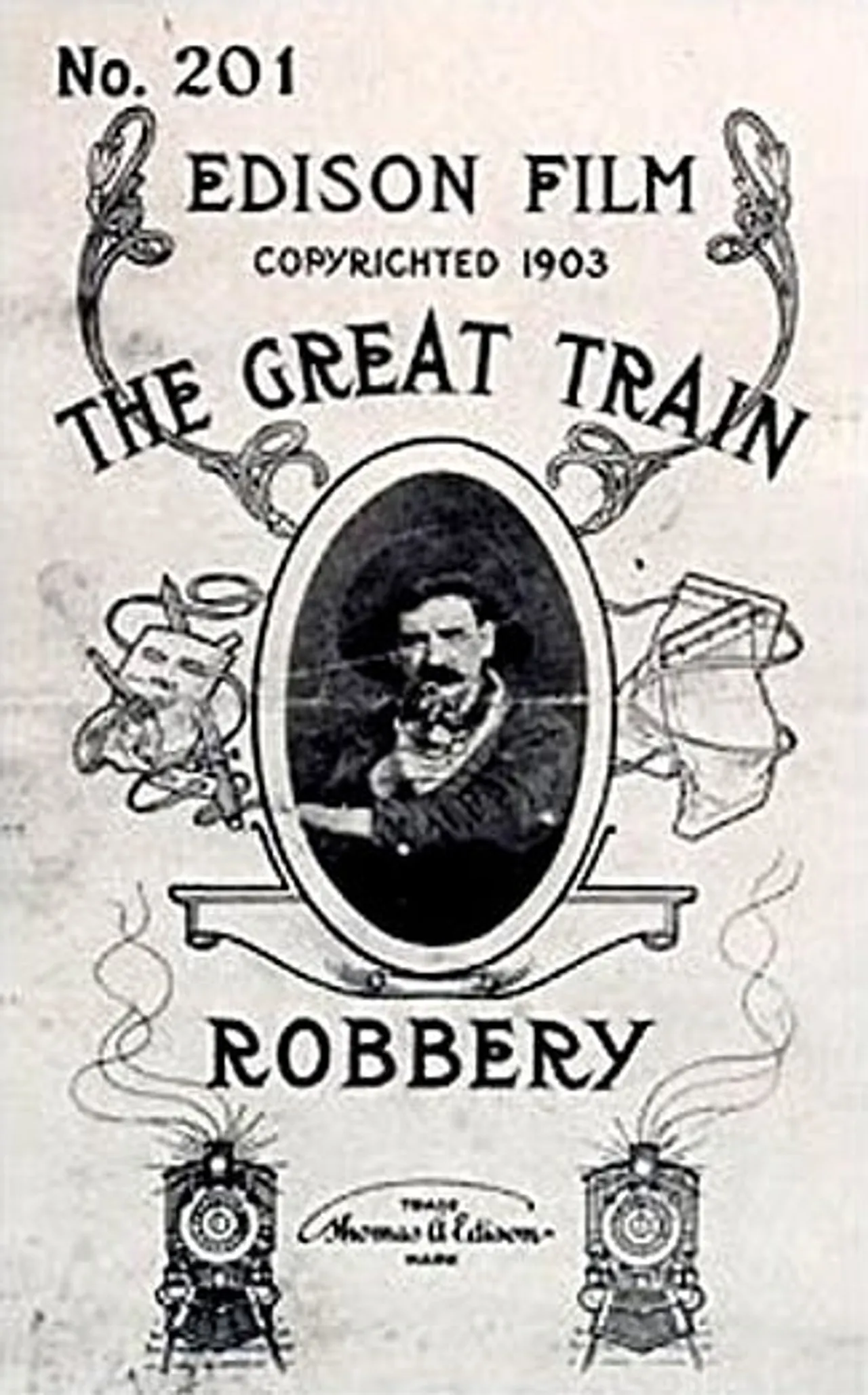
Four bandits hold up a telegraph operator, board a moving train, rob the passengers at gunpoint, and flee on horseback until a posse runs them down. Twelve minutes, shot on location and in studio, with cross-cutting, a panning camera and a bandit who fires his pistol straight into yours.
The film that proved movies could tell a story and sell a ticket. Every Western, and most of narrative editing, starts somewhere near here.
Background
The Great Train Robbery, directed by Edwin S. Porter for the Edison Manufacturing Company, is widely regarded as one of the first films to tell a clear, sustained story using editing techniques rather than simply recording a single continuous scene. Running only about twelve minutes, it follows a gang of bandits who rob a train and its passengers before being tracked down and killed by a posse.
What to watch for
Watch for the film’s use of cross-cutting between different lines of action, the outlaws and their pursuers, and for its famous final shot, unrelated to the plot, in which a bandit fires his pistol directly at the camera, an image that startled early audiences and has been referenced many times since. The film’s commercial success helped convince the industry that narrative filmmaking, rather than simple actuality footage, could be a profitable and popular form, and it laid groundwork that Westerns and narrative editing alike would build on for decades.