The Flying Ace (1926)
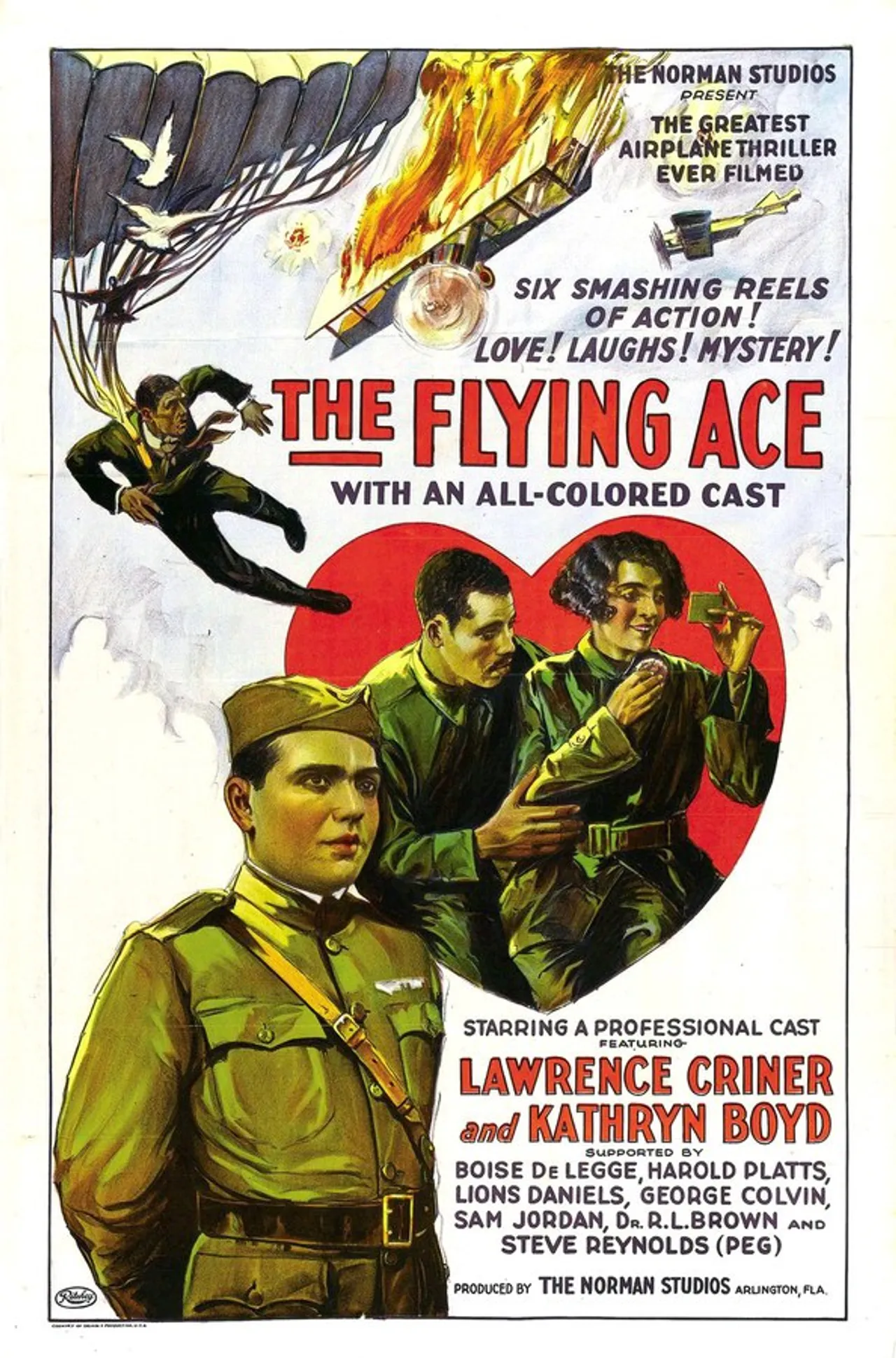
Returning World War I flying ace Billy Stokes takes up work as a railroad detective and investigates the disappearance of a paymaster and $25,000, tracing the theft to a rival aviator who abducts the stationmaster's daughter and forces a showdown in the air.
Produced by the white-owned Norman Studios of Jacksonville, Florida for Black audiences and partly inspired by aviator Bessie Coleman, The Flying Ace is the only one of Norman’s race films known to survive and was named to the National Film Registry in 2021.
Background
Produced by the white-owned Norman Studios in Jacksonville, Florida, for Black audiences, The Flying Ace was one of the race films that circulated in segregated theaters during the 1920s. Director Richard E. Norman built the story around a returning World War I pilot, and the film was partly inspired by the real aviator Bessie Coleman, who had trained in France and became a celebrated flier. It is the only one of Norman’s race films known to survive, which is why it matters so much to film historians. The Library of Congress named it to the National Film Registry in 2021. Its survival gives a rare view of Black-led filmmaking from the silent era.
What to watch for
Watch the aerial scenes, which give the film its most striking material and show the production making the most of its airplanes and outdoor locations. The plot follows Billy Stokes, who takes a job as a railroad detective after the war and traces a missing paymaster and $25,000 to a rival aviator. That rival abducts the stationmaster’s daughter, and the story builds toward a showdown in the air. Because the film is silent and runs about 65 minutes, much of the storytelling depends on intertitles and gesture, so pay attention to how the chase sequences set up the stakes. Its pairing of a heroic Black pilot with a crime plot was a deliberate choice in a period when such images were rare on American screens.