The Evidence of the Film (1913)
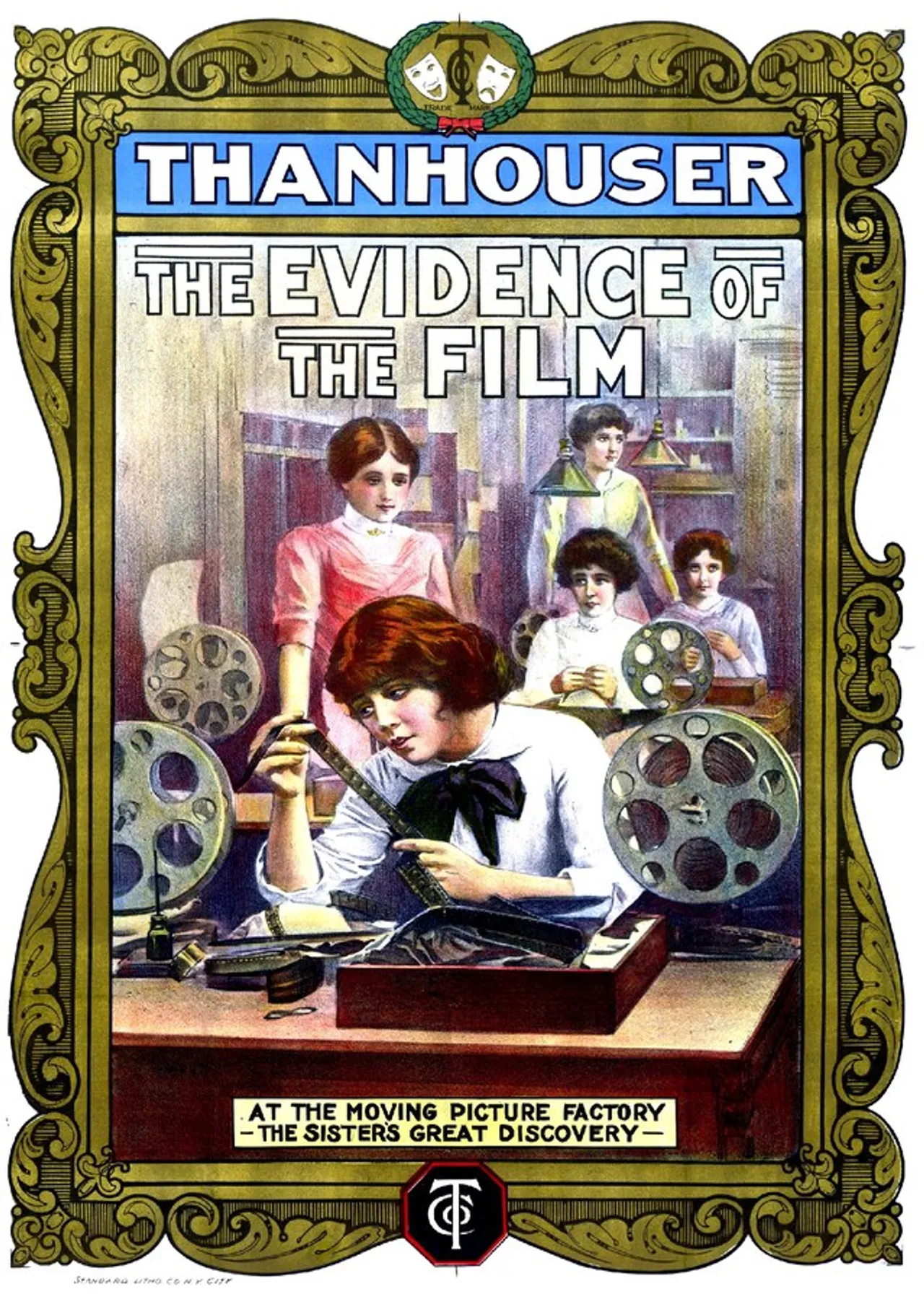
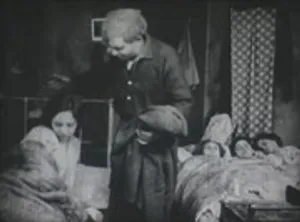
A messenger boy is framed for stealing bonds by a dishonest broker, until his sister, a film cutter, discovers that a movie crew unknowingly filmed the crime in the background and uses the footage to clear him.
The Evidence of the Film turns the young Thanhouser studio’s own trade into its plot device, using motion-picture footage as courtroom-style proof decades before that idea became a genre staple. Its only known print was found on a projection-booth floor in Montana in 1999, and it entered the National Film Registry in 2001.
Background
The Evidence of the Film is a 1913 short credited to director Lawrence Marston, with studio founder Edwin Thanhouser, for the Thanhouser Company, distributed by Mutual Film and released January 10, 1913. A messenger boy is framed by a dishonest broker for stealing bonds, and the boy’s sister, who works as a film cutter, discovers that a motion-picture crew unknowingly captured the crime in the background of their own footage, using that film to clear him in a courtroom-style demonstration. The only known surviving print was found in 1999 on the floor of a projection booth in a theater in Superior, Montana, and the film entered the National Film Registry in 2001.
What to watch for
The premise anticipates a courtroom device, film as forensic evidence, that would not become a familiar genre convention for decades, making this a strikingly early example of a young medium examining its own evidentiary power. Thanhouser built the plot around its own trade: the crew whose footage exonerates the boy are themselves filmmakers, a small reflexive touch for a studio only a few years into regular production. Given how the surviving print was recovered by chance nearly ninety years after release, the film is also worth seeing simply as an illustration of how much of this era’s output survives only through accident rather than deliberate preservation.