20,000 Leagues Under the Sea (1916)
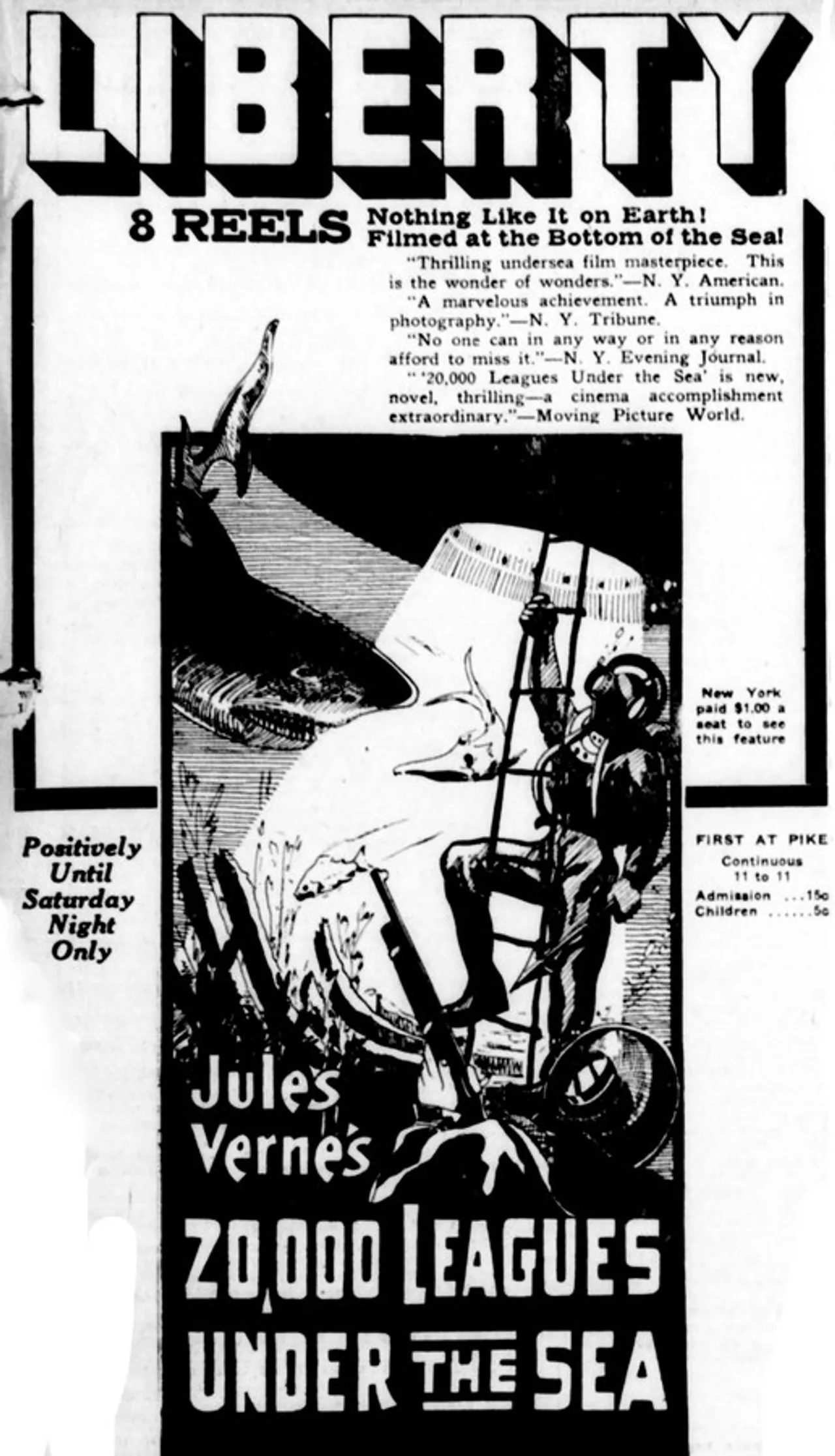
Captain Nemo prowls the oceans in his submarine Nautilus, sinking warships and taking castaways aboard, while a parallel story on a jungle island gradually reveals the roots of his vendetta. The plot blends Jules Verne's novel with elements of his sequel, The Mysterious Island.
Stuart Paton’s production is remembered for the pioneering underwater photography of the Williamson brothers, who used a watertight tube and mirror system to film real divers, sharks, and a full-scale Nautilus in the clear waters off the Bahamas. 20,000 Leagues Under the Sea is preserved in the National Film Registry.
Background
Stuart Paton directed this 1916 Universal adaptation of Jules Verne’s novel, with Allen Holubar as Captain Nemo. The film is best remembered for its underwater photography by the Williamson brothers, who built a watertight tube with a mirror system that let them film real divers, sharks and a full-scale Nautilus in the clear waters off the Bahamas. The story also borrows material from Verne’s sequel, The Mysterious Island, to explain Nemo’s vendetta. 20,000 Leagues Under the Sea is preserved in the National Film Registry as an early milestone of underwater cinematography.
What to watch for
The most striking material is the undersea footage, in which the camera follows real fish and divers rather than painted miniatures. The surface drama around Nemo’s vendetta is more conventional melodrama, so the reason to watch is the sea work: the Nautilus moving through real water, divers on the seabed, and shark sequences that still look unusually direct for 1916. Notice how the film cuts between the submarine voyages and the island story, which keeps the pacing lively even when the plot leans on coincidence.