Strange Illusion (1945)

Convinced by recurring dreams that his father was murdered, a college student grows suspicious of the smooth stranger courting his widowed mother, and sets out to prove the newcomer is hiding a killer's past.
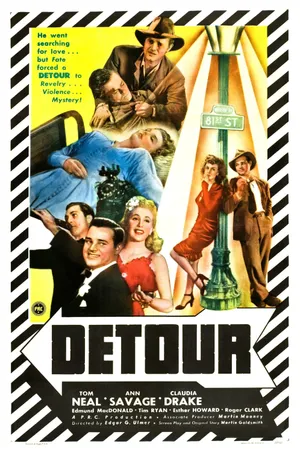
Strange Illusion reworks the bones of Hamlet into a contemporary psychological thriller, shot fast and cheap on PRC’s threadbare budgets by Edgar G. Ulmer, the same émigré director responsible for Detour that same year; its Freudian dream sequences and shadow-heavy camerawork have made it a minor touchstone for critics tracing Ulmer’s stylistic reach far beyond his resources.
Background
Edgar G. Ulmer directed Strange Illusion, a 1945 thriller made for the low-budget studio PRC, and the story is often described as a loose reworking of Hamlet. Jimmy Lydon plays a college student who becomes convinced through recurring dreams that his father was murdered, and Warren William plays the smooth stranger courting his widowed mother. Sally Eilers and Regis Toomey also appear. The film is one of several noir-leaning dramas Ulmer made on tight budgets during the 1940s, and it relies heavily on dream sequences to drive its plot.
What to watch for
Pay attention to the dream sequences, which Ulmer uses to suggest the student’s suspicions before the audience has any hard evidence. The visual style relies on shadows and tight framing typical of the period’s low-budget thrillers, and the staging of the house gives the story a claustrophobic feel. Lydon builds the character from anxiety into obsession, while William’s charm keeps the stranger hard to read. The final reveal depends on the viewer accepting the student’s dreams as a guide to what happened, which is the film’s central dramatic question.