Behind Green Lights (1946)
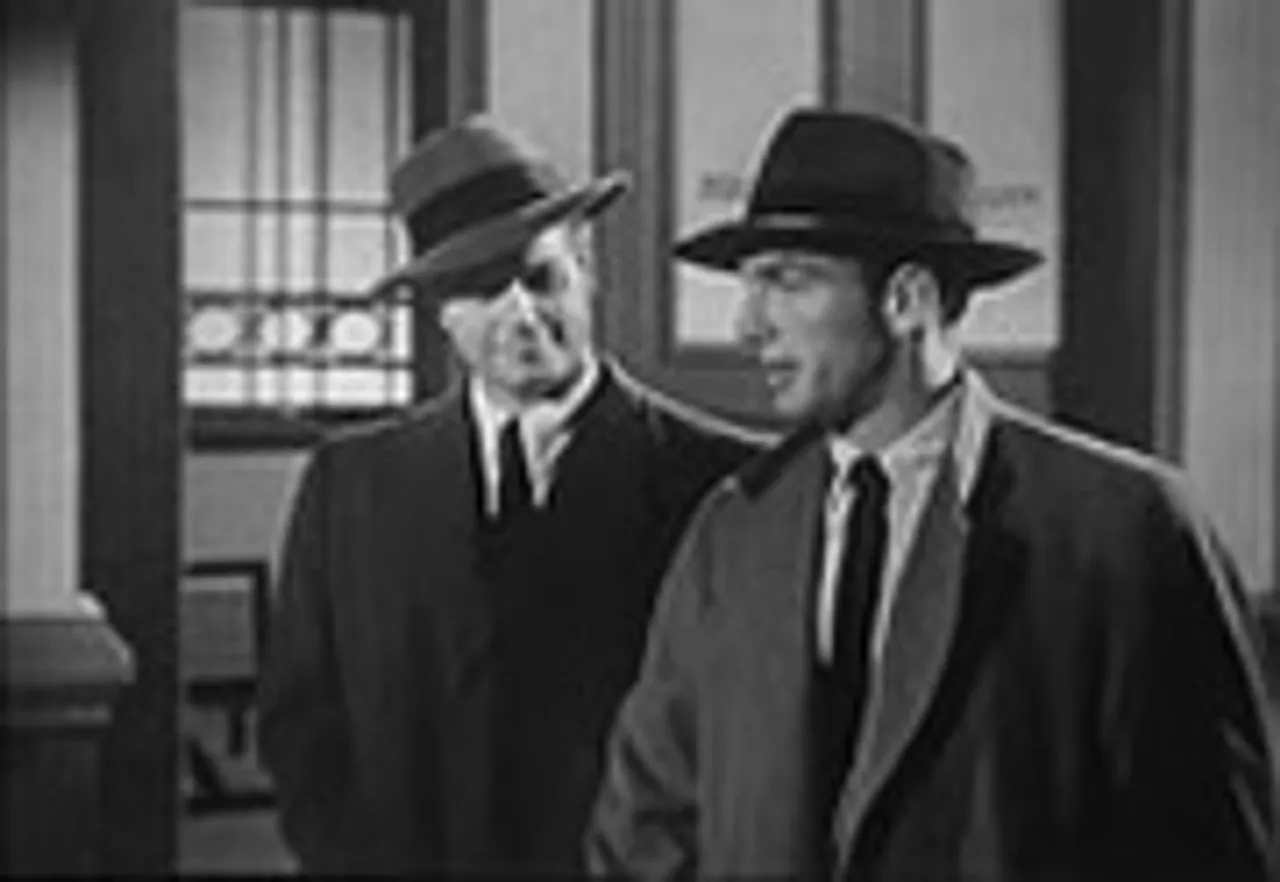
A corpse turns up outside a big-city police precinct on the eve of an election, plunging homicide detectives into a case that grows stranger as evidence disappears, a confession is withdrawn, and the body itself briefly goes missing. Piecing together the contradictions leads them to a doctor with far more to hide than a simple murder.
Adapted from a play by former New York City policeman Percy Baldwin and Rex Taylor, Behind Green Lights trades on the brisk, wisecracking tone Twentieth Century-Fox brought to its 1940s crime B-pictures, cramming a deliberately tangled plot into barely an hour of screen time.
Background
Behind Green Lights was directed by Otto Brower from a screenplay by Charles G. Booth and Scott Darling, adapting a play by former New York City policeman Percy Baldwin and Rex Taylor. Produced by Robert Bassler for 20th Century-Fox, it was released on February 15, 1946, led by Carole Landis as a reporter and William Gargan as the detective investigating the case. Fox built much of its 1940s output around exactly this kind of brisk, low-budget crime programmer, pairing contract players with a tight shooting schedule and a plot dense enough to fill its running time without much room to spare.
What to watch for
The plot turns on the corpse of a political fixer found outside a police precinct on election eve, an investigation complicated by a confession that is withdrawn, evidence that disappears, and a body that briefly goes missing from the morgue itself. William Gargan’s Lieutenant Sam Carson works through the contradictions methodically rather than flashily, and Mary Anderson and a young John Ireland fill out a supporting cast more memorable than the mystery’s resolution. The film’s energy comes less from its twists, some of which strain credulity, than from its pace, a reminder of how much plot 1940s studios expected a one-hour crime picture to carry.