Detour (1945)
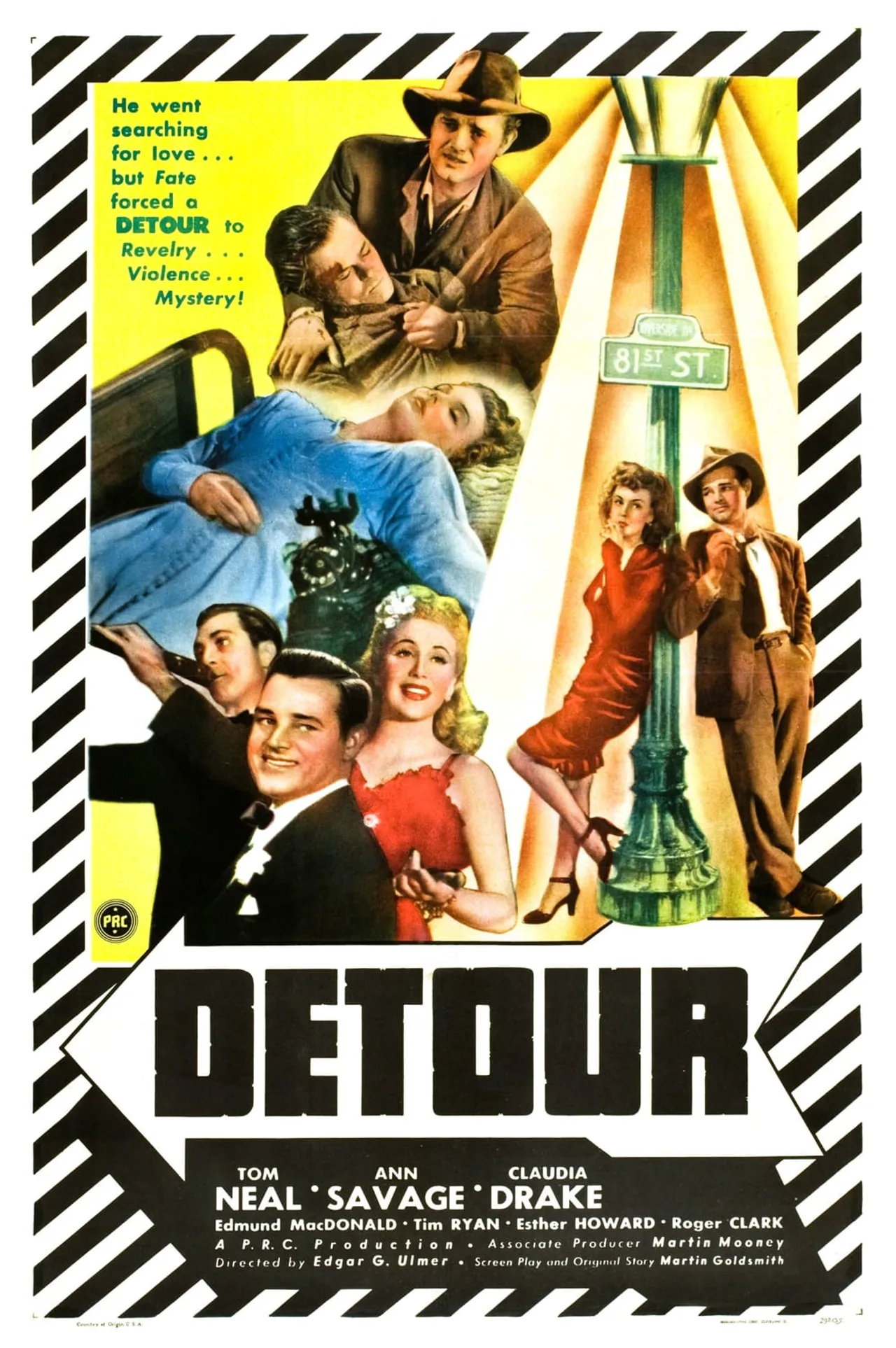
A hitchhiking nightclub pianist heading west to reunite with his girl is dragged into a spiral of bad luck, a dead stranger, and a blackmailer who will not let go.
Shot in six days on Poverty Row, Detour has become the definitive statement of noir fatalism: “whichever way you turn, fate sticks out a foot to trip you.”
Background
Detour was made for Producers Releasing Corporation, one of the smallest Hollywood studios, in a matter of days. Director Edgar G. Ulmer had worked in Weimar-era Germany and alongside F. W. Murnau before landing on Poverty Row, and he turned a tiny budget into a strength: nearly everything happens in cheap cars, roadside diners and cramped rooms, lit like a nightmare. Martin Goldsmith adapted his own 1939 novel for the screenplay. The Library of Congress added the film to the National Film Registry in 1992.
What to watch for
Two things make it unusual. First, the story is told in flashback by Al Roberts, and it is never quite clear whether he is telling the truth. Second, Ann Savage’s Vera, who appears halfway through, is one of the most vicious characters in classic noir; Tom Neal’s Al spends the rest of the film in her grip. Pay attention to the cheap-looking process shots, which end up making the road feel unreal, and to the phone-cord scene late in the film.