Menilmontant (1925)
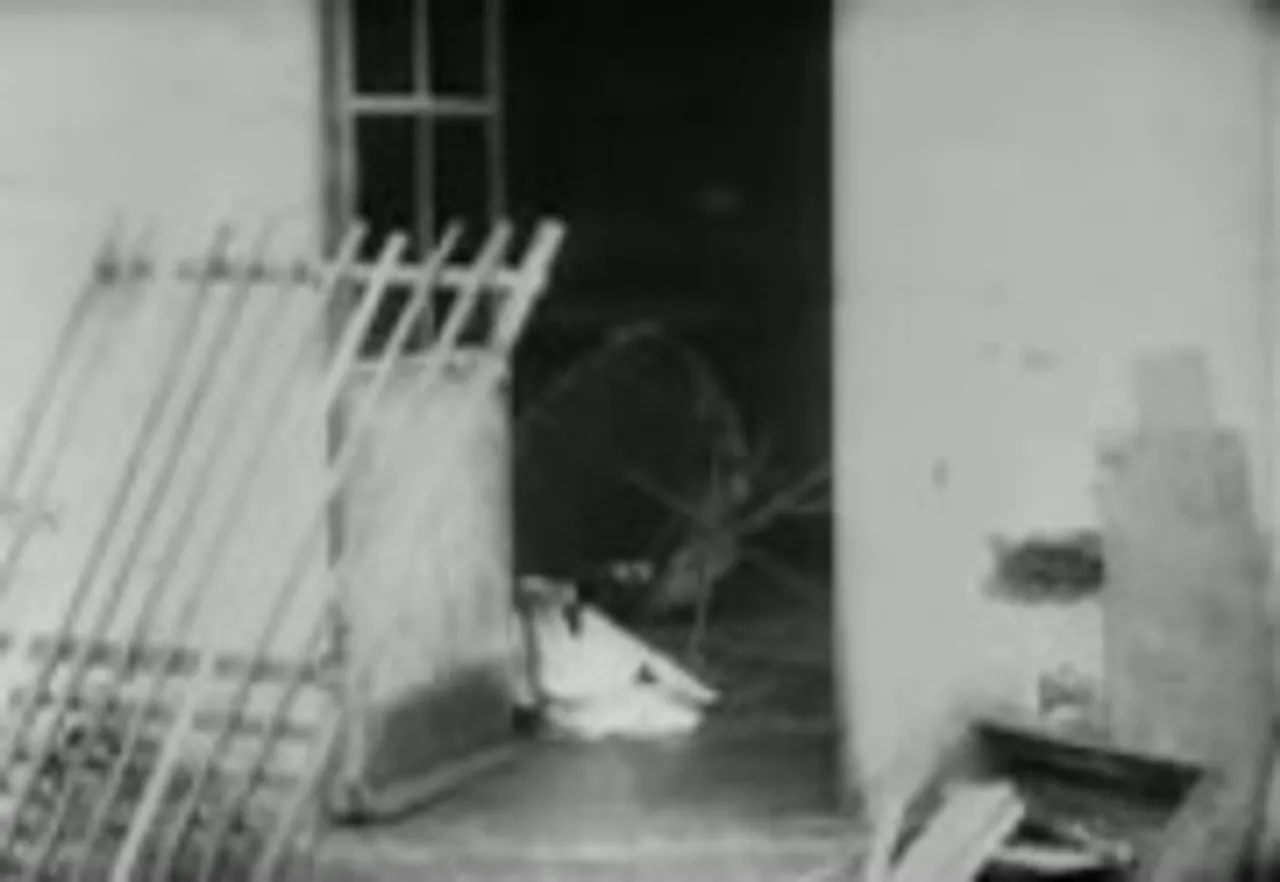
After an axe murder leaves two sisters orphaned, they move to Paris and both fall for the same man, whose betrayal sends one of them into poverty and despair on the city streets while she carries his child alone.
Told with no intertitles at all, Menilmontant relies entirely on Dimitri Kirsanoff’s rapid-fire editing and double exposures to carry its story, an approach critic Pauline Kael would later single out as her single favorite film ever made.
Background
Menilmontant was written, directed, shot, and edited by Dimitri Kirsanoff, a Paris-based filmmaker of Estonian birth working in the French avant-garde of the 1920s. The 38-minute film tells its story entirely through images, rapid cutting, and double exposure, without a single intertitle, an unusual choice even among silent films of the period that typically relied on text to carry dialogue and transitions. It opens with an axe murder that leaves two sisters orphaned and follows them to the working-class Paris neighborhood that gives the film its title, where both fall for the same man.
What to watch for
After the man betrays her, one sister is left pregnant and destitute on the streets of Paris, and Kirsanoff renders her decline almost entirely through fragmented, overlapping images rather than clear narrative exposition, forcing the viewer to piece together what has happened from glances, superimposed faces, and disorienting urban shots. Critic Pauline Kael later praised the film as an exquisite, poetic work and one of the least-known masterpieces of the screen, a judgment that has helped keep Menilmontant in revival screenings and museum programs decades after its original release, even though Kirsanoff himself remains little known outside specialist circles.