King of Jazz (1930)
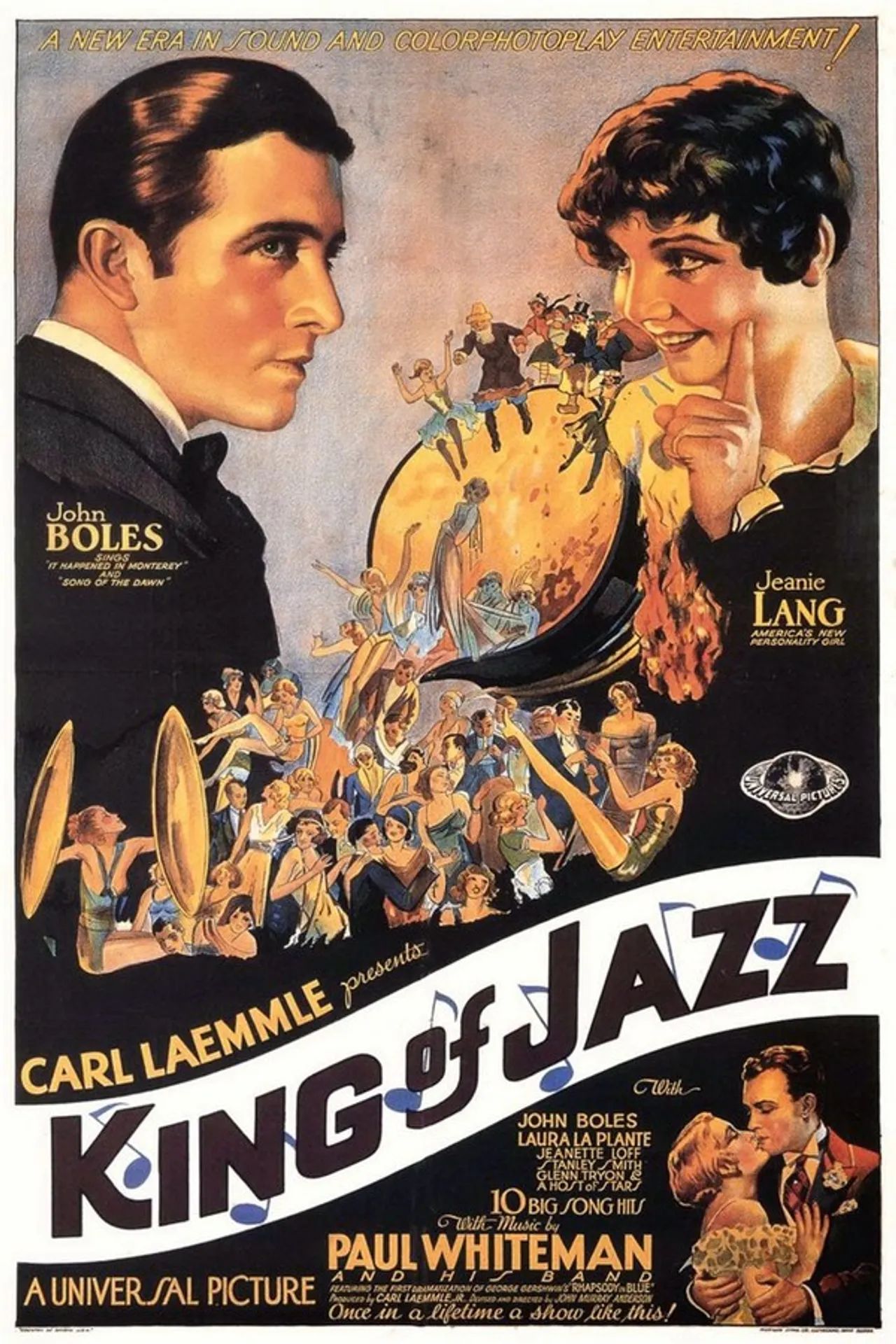
A revue-style showcase for bandleader Paul Whiteman's orchestra, stringing together musical numbers, comedy sketches, and elaborate Technicolor set pieces rather than a single story, and closing with the lavish "Melting Pot of Music" finale.
King of Jazz was an all-Technicolor, all-talking spectacle that marked Bing Crosby’s screen debut and featured the first Technicolor animated sequence, by Walter Lantz; it won the Academy Award for Best Art Direction despite disappointing at the box office on release.
Background
King of Jazz is a revue-style film built around bandleader Paul Whiteman’s orchestra, stringing together musical numbers, comedy sketches, and elaborate Technicolor set pieces rather than following a single continuous story. It was an all-Technicolor, all-talking production at a time when both color and synchronized sound were still relatively new to feature filmmaking, and it marked the screen debut of Bing Crosby, performing as a member of a vocal group within the larger show.
What to watch for
Watch for the “Melting Pot of Music” finale, an elaborate closing number meant to represent the diverse musical traditions feeding into American popular music, and for the film’s early Technicolor animated sequence, created by animator Walter Lantz, one of the first instances of color animation in a feature film. The production won the Academy Award for Best Art Direction, despite disappointing at the box office, and it remains an interesting document of how Hollywood tried to package music and spectacle in the first years of sound cinema.