Cops (1922)
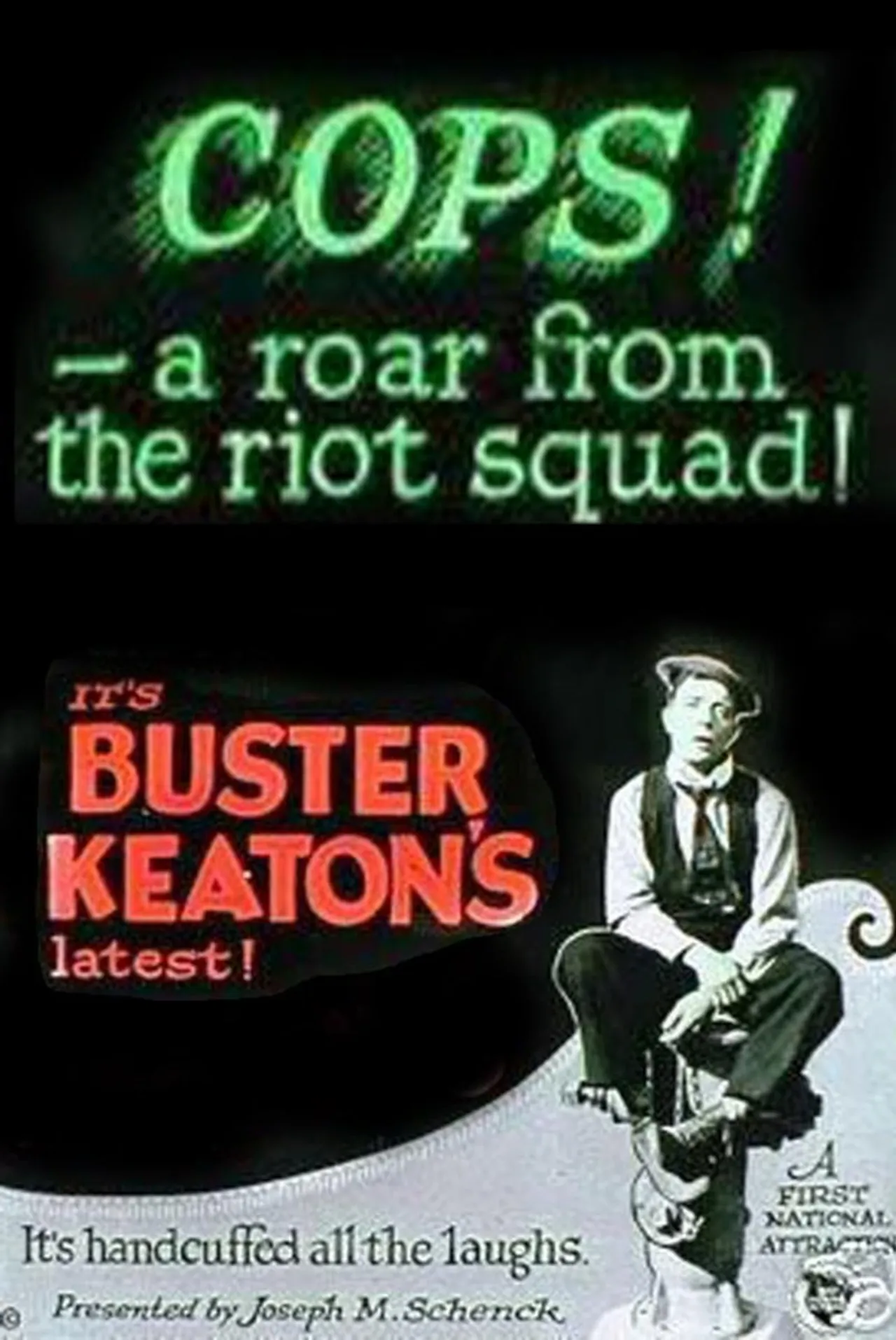
After his girlfriend rejects him for having no money, a young man unwittingly buys a load of stolen furniture, stumbles into the middle of a police parade, and spends the rest of the film fleeing an entire city police force through the streets of Los Angeles.
Cops is widely ranked among Buster Keaton’s finest two-reelers, its escalating chase choreography and bleak final image — Keaton alone before a locked precinct door — shot while Keaton’s friend and mentor Roscoe Arbuckle stood trial, a shadow some historians read into the short’s uneasy comedy.
Background
Cops is widely considered one of Buster Keaton’s finest short films, built around an escalating chase in which Keaton’s character, having inadvertently ended up in possession of stolen goods, is pursued through the streets of Los Angeles by what seems to be the entire city police force. Keaton co-directed it with Edward F. Cline. It was made while Keaton’s friend and mentor, Roscoe Arbuckle, was standing trial on charges that would effectively end Arbuckle’s career even after his acquittal, and some historians have read a shadow of that ordeal into the short’s unusually bleak final image.
What to watch for
Watch for the sheer scale and precision of the chase choreography, with Keaton weaving through crowds, fences, and traffic while an ever-growing mob of police officers pursues him. The final shot, Keaton alone facing a locked precinct door, is one of the most discussed images in his body of work, a moment of unexpected darkness inside a film otherwise built for laughs.