Alice in Wonderland (1915)
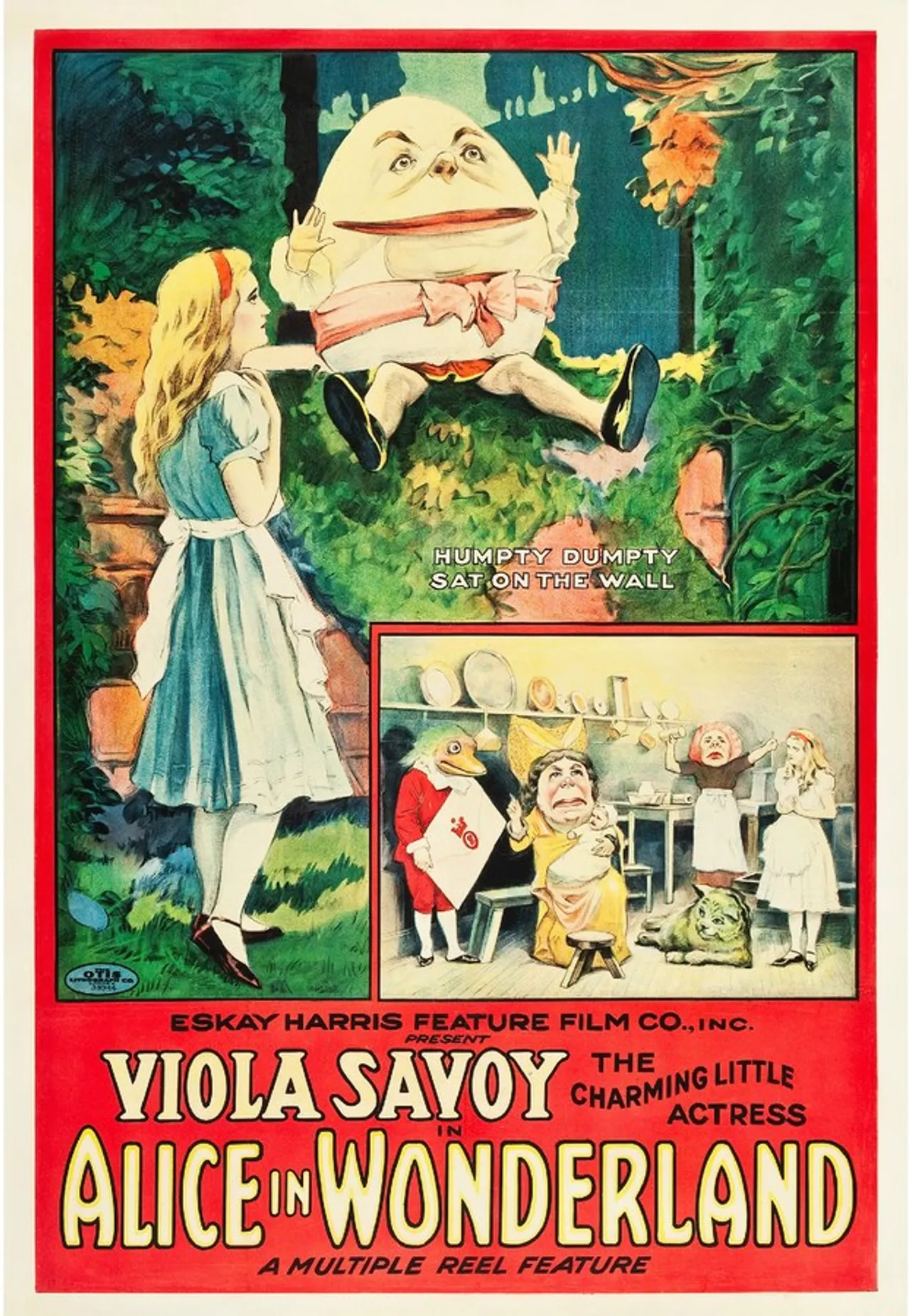
Alice follows a White Rabbit down a hole into a topsy-turvy world of a hookah-smoking Caterpillar, a Mad Hatter's tea party, and a card-playing Queen of Hearts who wants her beheaded, before waking on a riverbank to find it was all a dream.
This Alice in Wonderland was the first American attempt at a feature-length version of Carroll’s story, arriving two decades before sound and special effects could do much justice to the Cheshire Cat or the Caterpillar’s hookah, and it survives today largely as a curiosity of how early cinema tackled a text built on visual nonsense.
Background
This Alice in Wonderland was directed and written by W. W. Young and starred Viola Savoy in the title role, released on January 19, 1915, as the first American feature-length attempt at Carroll’s story. It was also the first Alice film to draw on both Alice’s Adventures in Wonderland and its sequel Through the Looking-Glass, though most of the Looking-Glass material is now lost, surviving only in fragments or written descriptions of what once followed the Wonderland section. Herbert Rice co-starred, and the production relied on elaborate costumes and oversized animal-head masks to stage characters like the Caterpillar and the Queen of Hearts without the special-effects tools later adaptations could use.
What to watch for
The film includes a staging of the “Father William” poem, complete with the old man’s back-somersault from Tenniel’s original illustrations, a sequence many later adaptations drop entirely. The giant animal-head costumes used for characters like the Mock Turtle and the Gryphon look unsettling rather than whimsical by modern standards, which is itself worth noting: it shows how a visual logic built on Victorian illustration could read as charming in 1865 and as faintly disquieting once performers had to physically wear it. As the earliest surviving American attempt at the material, the film works best as a record of how early cinema solved, or didn’t solve, the problem of translating Carroll’s nonsense into images.