The Blue Bird (1918)
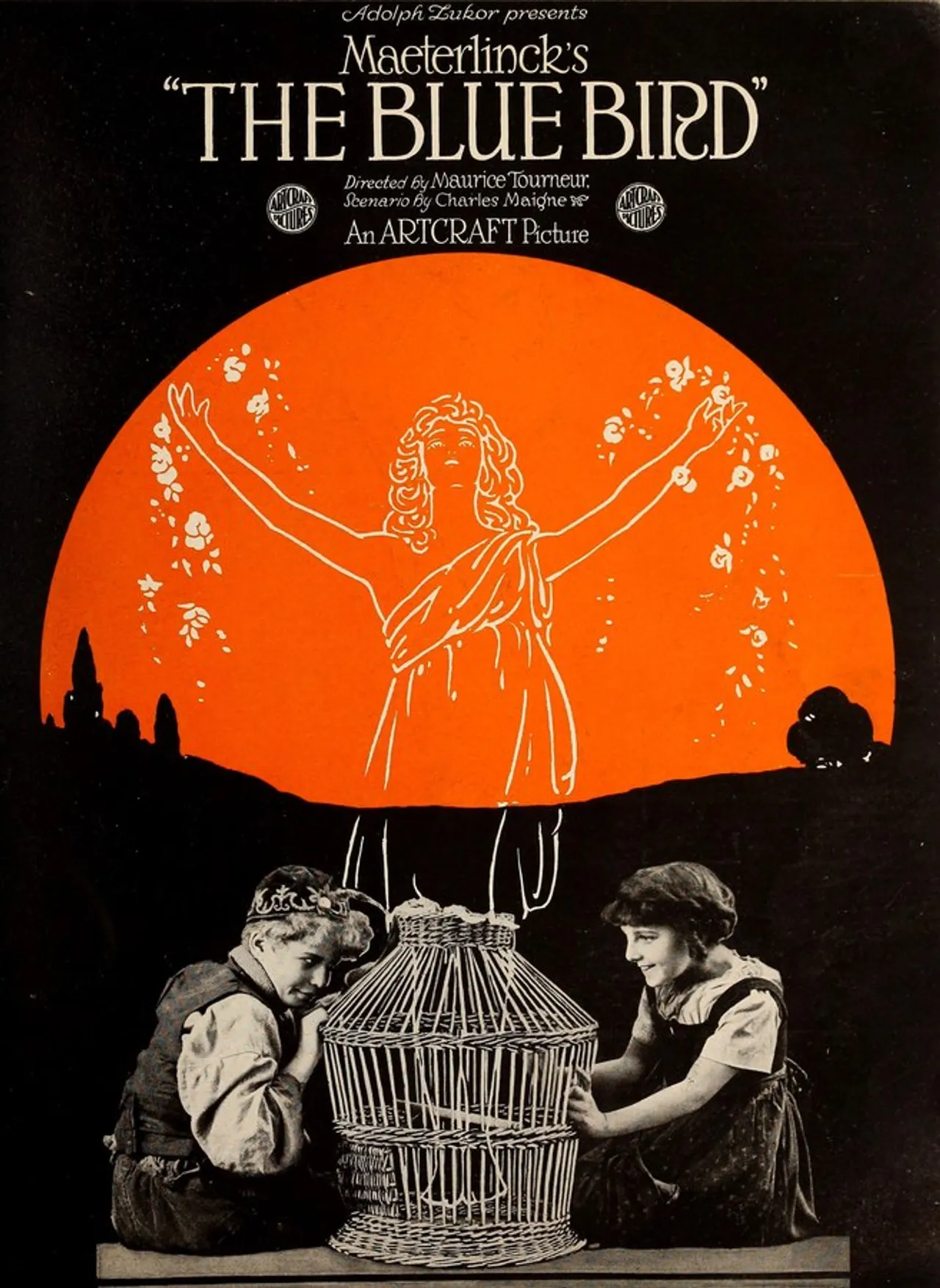
A woodcutter's children, Mytyl and Tyltyl, are sent by a fairy to find the Blue Bird of Happiness, journeying through the Land of Memory, the Palace of Night, and other realms with personified Light, Water, and Bread, only to find the bird waiting back home.
Maurice Tourneur turned Maeterlinck’s symbolist play into a showcase of pictorial invention, using silhouette, tableau, and stylized sets to build its allegorical worlds. A commercial disappointment in its day, The Blue Bird was selected for the National Film Registry.
Background
The Blue Bird is a 1918 fantasy directed by Maurice Tourneur, adapting Maurice Maeterlinck’s symbolist play about two children sent by a fairy to find the Blue Bird of Happiness. Produced for Adolph Zukor’s Paramount and shot at the Fort Lee, New Jersey studios that anchored the early American film industry, it was reported at the time to set a production record for studio set size, building the Palace of Night, the Land of Memory, and other allegorical realms entirely indoors. The New York Times praised it on release, though it did not succeed commercially. It entered the National Film Registry in 2004.
What to watch for
Tourneur’s pictorial technique stands out: he leaned on silhouette, deep-focus tableau staging, and heavily stylized sets rather than special-effects trickery to build the story’s dreamlike realms, an approach that influenced later fantasy filmmaking more than its modest box-office return would suggest. The contrast between the earthbound opening scenes in the woodcutter’s cottage and the abstract, painterly look of the children’s journey through Memoryland and the Palace of Night shows how deliberately Tourneur separated the real world from the allegorical one. For a film made in 1918, the scale of its constructed sets remains the most striking thing about it.