The Wedding March (1928)
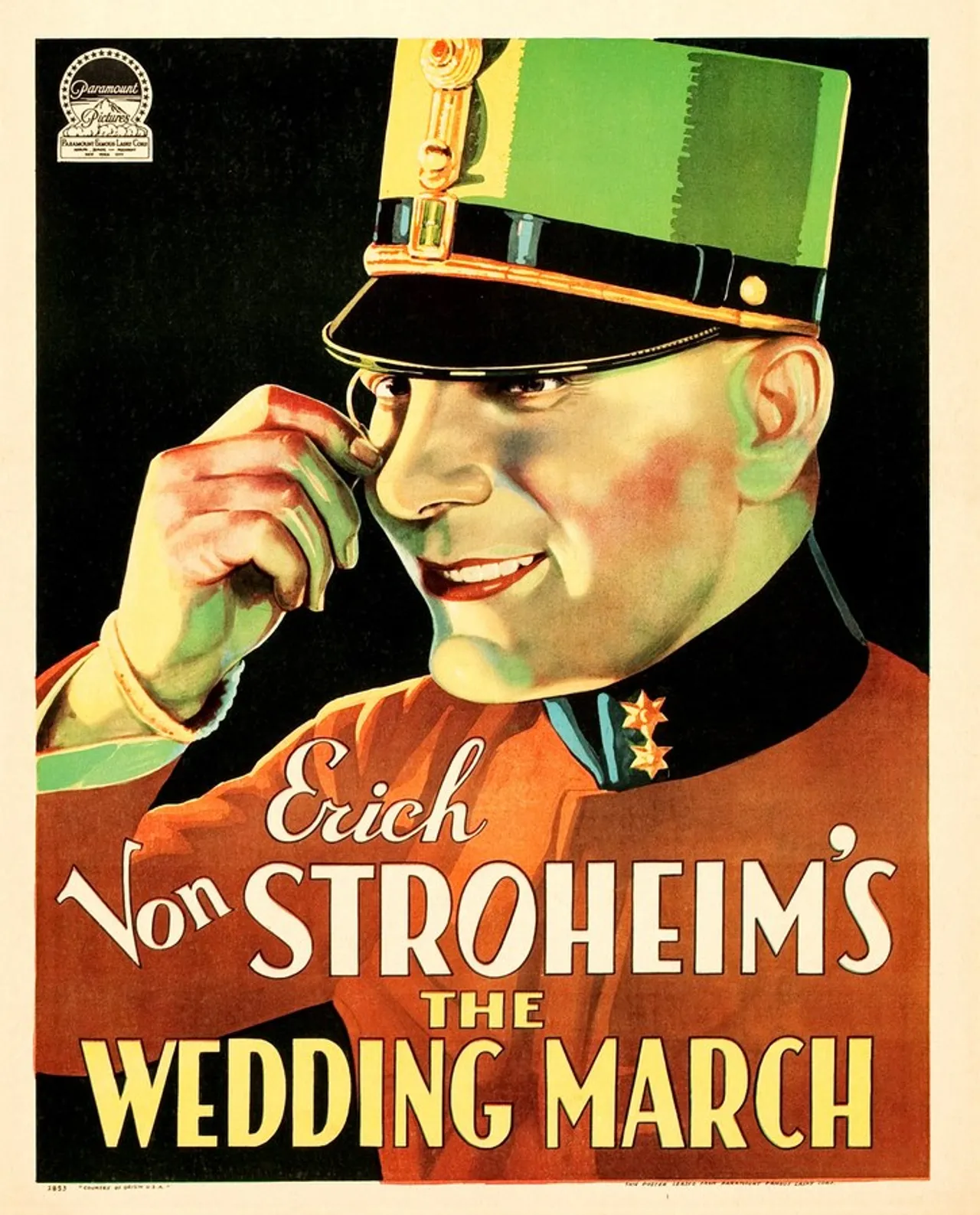
In pre-war Vienna, an impoverished cavalry prince falls for an innkeeper's daughter after accidentally injuring her during a royal parade, but family debts push him toward a loveless marriage to a wealthy industrialist's daughter instead, while the innkeeper's daughter's spurned suitor plots revenge.
The Wedding March was Erich von Stroheim’s most extravagant production, shot over six months on a budget that ballooned past a million dollars before Paramount cut his sprawling vision in two; its sequel, The Honeymoon, was later destroyed in a fire and survives only through this half. It was named to the National Film Registry in 2003.
Background
The Wedding March is a 1928 Paramount silent film written, directed by and starring Erich von Stroheim, who played the impoverished cavalry prince at its center. Stroheim’s production was known for its scale and length, and Paramount reduced his original vision to the cut that survives. The sequel he had planned, The Honeymoon, was later destroyed in a fire, so this half is the only part that remains. Fay Wray has a role as the innkeeper’s daughter, and the cast also includes ZaSu Pitts and Matthew Betz. The film was named to the National Film Registry in 2003, and it runs about 113 minutes.
What to watch for
Look for the film’s dense attention to period detail, from the Viennese setting to the uniforms and the royal parade that opens the story. The accident during the parade brings the prince and the innkeeper’s daughter together and establishes the film’s class tension. The later plot, driven by family debts and a loveless arranged marriage, is cruel and ironic, with the spurned suitor’s revenge complicating the romance. Stroheim’s fondness for realistic detail and carefully composed shots is visible throughout. The length of the film reflects the amount of material he wanted to include, and it remains a striking example of how far the silent era could push the scale of a melodrama.