The Emperor Jones (1933)
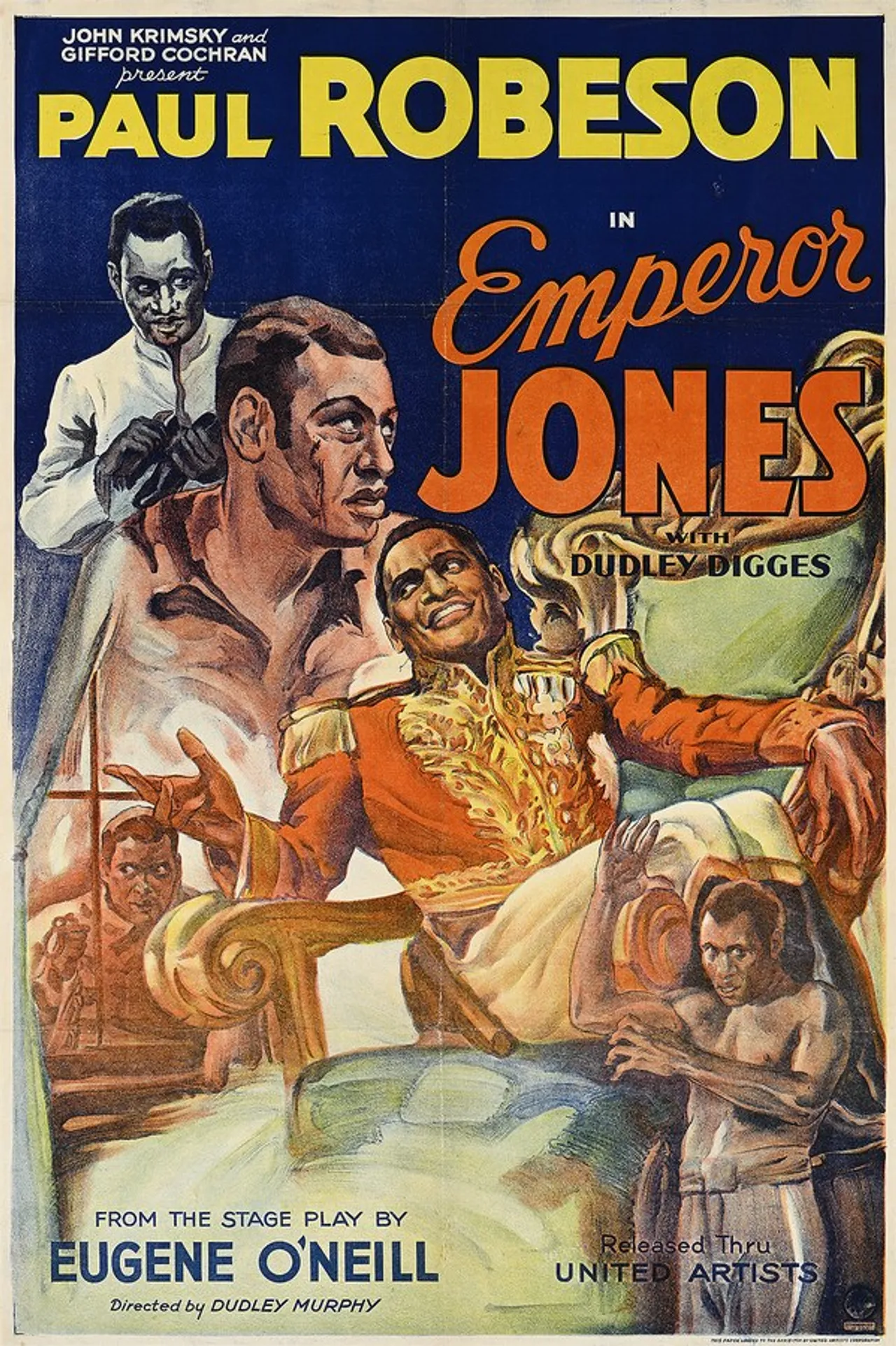
Pullman porter Brutus Jones talks and bullies his way up from a chain gang to the throne of a Caribbean island, ruling by bluff and the legend that only a silver bullet can kill him. When the islanders finally rise against him, he flees into the jungle as his nerve and his empire fall apart.
Adapted from Eugene O’Neill’s 1920 play and shot at an Astoria studio outside the Hollywood system, this was the first American feature to bill a Black actor above a white supporting cast. The Emperor Jones is a landmark of Paul Robeson’s screen career, though exhibitors cut moments of Black defiance for Southern bookings; United Artists’ failure to renew the copyright placed it in the public domain.
Background
The Emperor Jones adapts Eugene O’Neill’s 1920 stage play and was shot at a studio in Astoria, New York, outside the usual Hollywood system, giving its makers more freedom with material that mainstream studios might have been reluctant to produce. It is widely recognized as the first American feature film to bill a Black actor, Paul Robeson, above an otherwise white supporting cast, a significant milestone given the severely limited roles mainstream Hollywood typically offered Black performers at the time.
What to watch for
Watch for Robeson’s commanding performance as Brutus Jones, a Pullman porter who talks and bullies his way up from a chain gang to rule a Caribbean island through bluff and a carefully cultivated legend of invincibility, before his empire collapses once the islanders rise against him. Some theatrical exhibitors in the American South reportedly cut moments depicting Jones’s defiance for local bookings, a reminder of how even this landmark film was shaped by the racial politics of its era. United Artists’ failure to renew its copyright placed the film in the public domain.