The Black Pirate (1926)
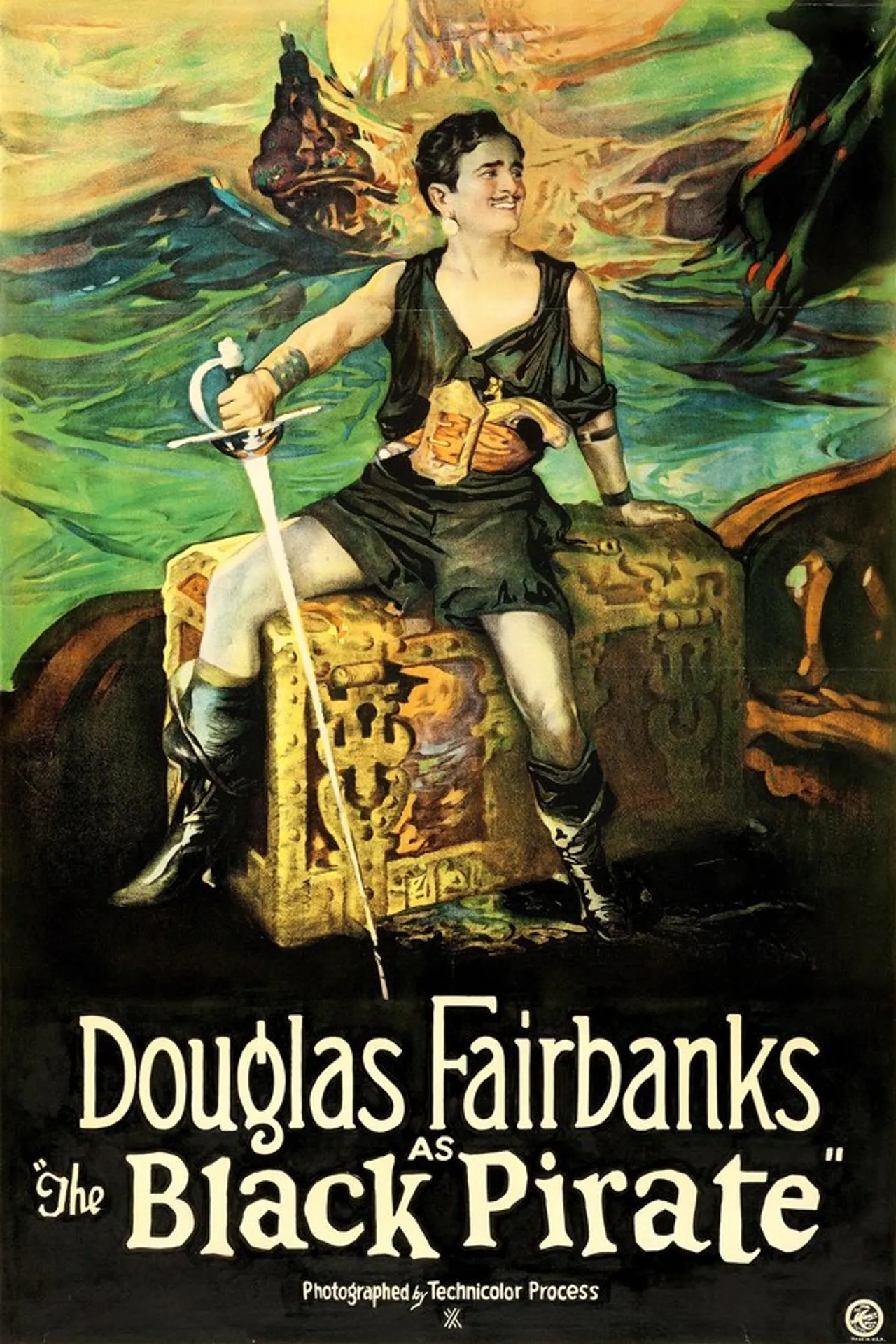
A young nobleman survives a pirate raid that kills his father and swears revenge, joining the pirate crew by out-dueling their captain and single-handedly capturing a merchant ship. His scheme is complicated when the pirates seize a vessel carrying a princess.
One of the first features shot in two-color Technicolor, The Black Pirate was Douglas Fairbanks’s bet that audiences would accept a full adventure in color; its athletic set pieces, including the famous ride down a ship’s sail on a dagger, are preserved in the National Film Registry.
Background
The Black Pirate was one of the first feature films shot in early two-color Technicolor, and Douglas Fairbanks, already one of the biggest stars of the silent era, used it as a showcase for both the new color process and his own athletic stunt work. He plays a young nobleman who infiltrates a pirate crew to avenge his murdered father, working his way into their trust through feats of swordsmanship and daring.
What to watch for
Watch for the film’s most famous stunt, in which Fairbanks slides down a ship’s sail using only a knife driven into the canvas to control his descent, a sequence that has been referenced and imitated many times since. The early Technicolor process gives the film a distinctive, slightly muted color palette very different from later color films, and it is worth watching partly to see how audiences of the mid-1920s first experienced color adventure spectacle. It is preserved in the National Film Registry.