Scarlet Street (1945)
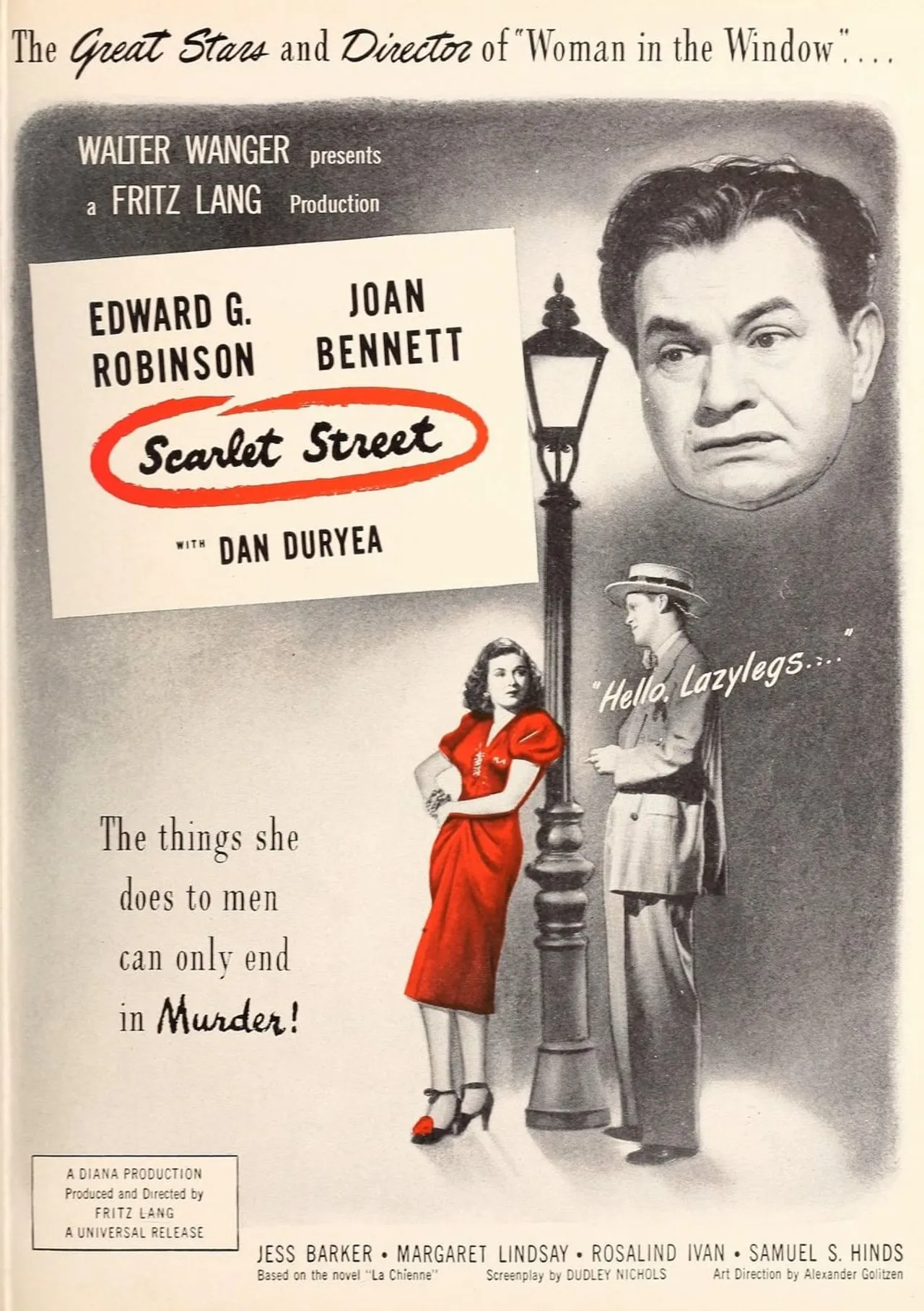
A meek cashier and Sunday painter falls for a woman who, with her boyfriend, decides he must be a rich artist worth fleecing. He steals to keep her; she sells his canvases under her own name; and Lang lets every choice curdle into something none of them can take back.
Lang remade his own La Chienne in Hollywood and somehow got the bleakest ending past the censors — nobody is punished by the law, only by themselves.
Background
Fritz Lang reunited the stars of his previous film, The Woman in the Window: Edward G. Robinson, Joan Bennett and Dan Duryea. This one remakes Jean Renoir’s 1931 film La Chienne, with Robinson as Chris Cross, a mild cashier whose paintings are sold under someone else’s name. Some state and local censors banned it, and the ending, in which no one is caught by the law, was the reason.
What to watch for
The final scenes are among the bleakest in classic noir. Chris ends up a homeless drifter, walking past a gallery where his painting, signed by another artist, is being sold for a fortune, while the voices of the people he wronged play in his head. Duryea’s slimy Johnny is a career-best performance, and Bennett’s Kitty is more complicated than she first appears. The film’s moral is not that crime is punished; it is that some people punish themselves.