Salomé (1923)
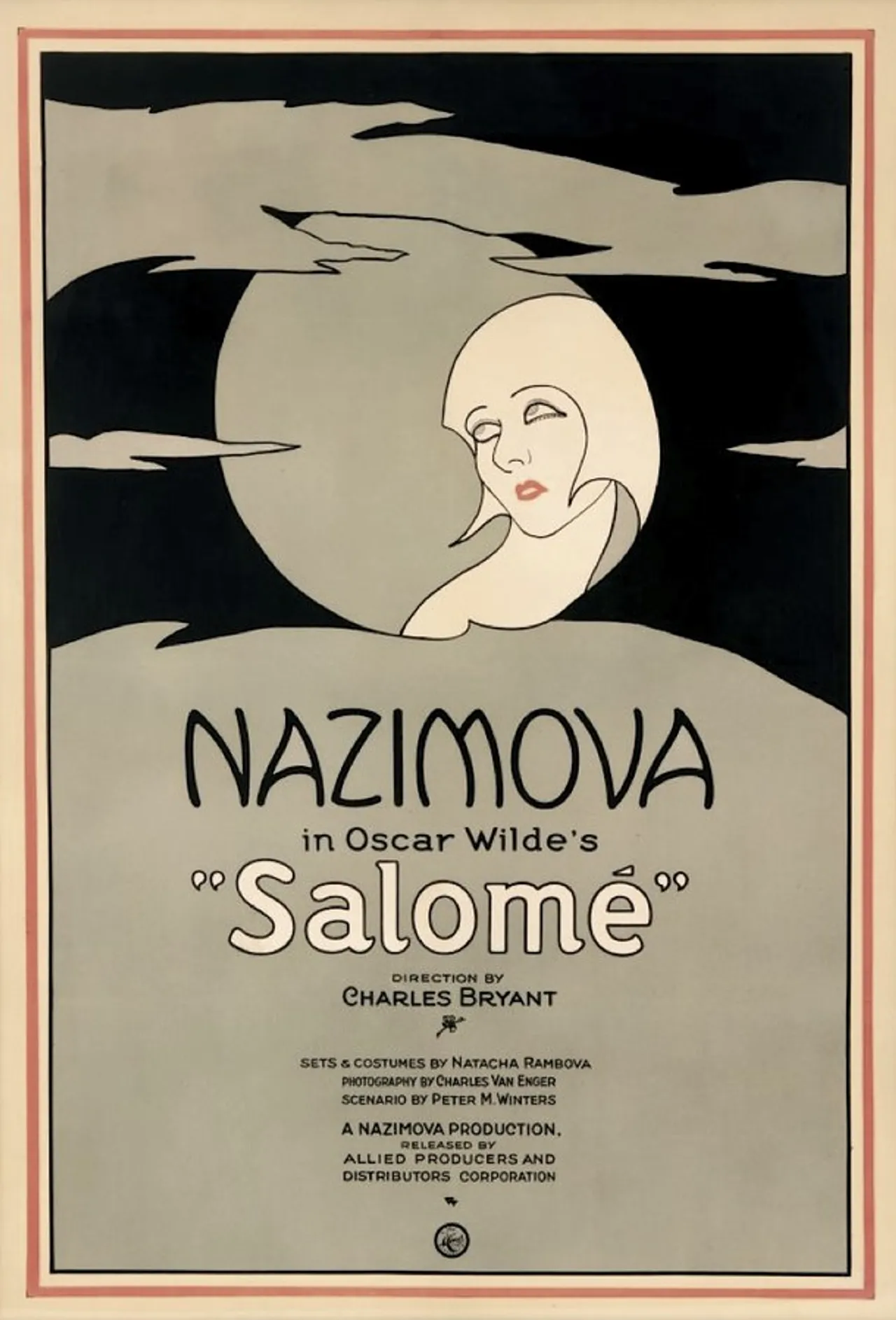
In Oscar Wilde's retelling of the biblical episode, Herod's stepdaughter Salomé fixes on the imprisoned prophet Jokanaan, and when he rebuffs her she performs her dance for the king in exchange for the prophet's head on a silver charger.
Produced by and starring Alla Nazimova, Salomé stakes a claim as one of the first American art films, its stark white sets and Aubrey Beardsley-inspired costumes by Natacha Rambova subordinating story to design. It was selected for the National Film Registry.
Background
Salomé was produced by and starred Alla Nazimova, and Charles Bryant is credited as director. The film is known for its stark white sets and costumes by Natacha Rambova, which draw on Aubrey Beardsley’s illustrations for Oscar Wilde’s play. Its restrained, stylized approach sets it apart from the lavish spectacle of Hollywood productions of the same period. Wilde wrote the play in French in 1891. The film is considered one of the early American art films, and it was selected for the National Film Registry.
What to watch for
The story follows Herod’s stepdaughter Salomé, who becomes fixated on the imprisoned prophet Jokanaan. When he rebuffs her, she performs a dance for the king in exchange for the prophet’s head on a silver charger. Watch the sets, with white, geometric spaces and minimal backdrops that make the characters seem to move through an abstract world. Rambova’s costumes are equally stylized, and Nazimova’s performance is slow and deliberate, built on stark gestures. The dance sequence is the centerpiece, staged so that Nazimova’s movement stands out against the simplified design.