One A.M. (1916)
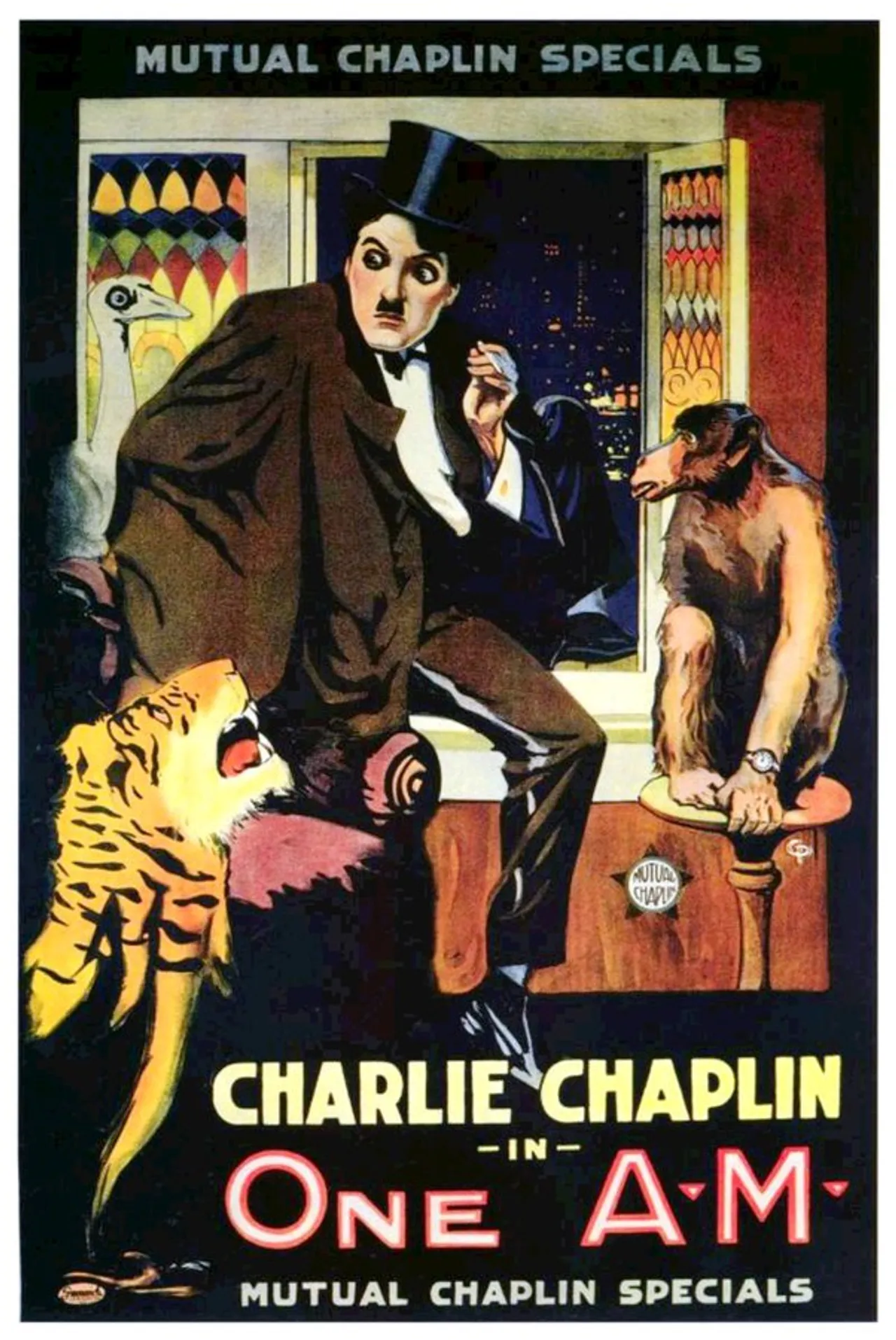
A wealthy drunk arrives home late at night and wages a losing battle against his own house — a spinning table, a taxidermied bear rug, a swinging pendulum clock, and a folding Murphy bed.
One A.M. is a virtual solo performance: aside from a taxi driver seen briefly at the start, Chaplin is the only human actor onscreen, turning the entire two-reeler into an extended pantomime duel between a drunk man and his furniture.
Background
One A.M. was a two-reel comedy written, directed and starred in by Charlie Chaplin, with Albert Austin in a supporting role. It was made during Chaplin’s period at the Mutual Film Corporation. The film is an early example of his use of a single confined set and extended physical comedy, an approach he would develop further in later shorts. It is one of the purest demonstrations of his skill as a performer working almost alone.
What to watch for
Aside from a taxi driver seen briefly at the start, Chaplin is the only human actor on screen, so the film becomes an extended duel between a drunk man and his house. Watch the objects he struggles with: a spinning table, a taxidermied bear rug, a swinging pendulum clock and a folding Murphy bed. Each is used for a gag built on timing and precise movement. Chaplin’s performance has no dialogue, so the physical pacing carries every joke. The gags escalate as the night goes on, and the set design is what makes the comedy work.