A Fair Exchange (1914)

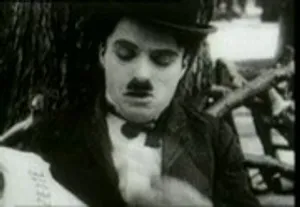
While his domineering wife naps on a park bench, Charlie slips off and starts flirting with a pretty stranger, unaware that a rival suitor is simultaneously romancing the sleeping wife. Misunderstandings and a park policeman turn the outing into a chase.
Released as Getting Acquainted before being reissued as A Fair Exchange, this park comedy was the next-to-last film Chaplin made at Keystone and the last in which he and Mabel Normand shared the screen.
Background
Released on December 5, 1914 as Getting Acquainted and later reissued as A Fair Exchange, this one-reel Keystone comedy was written and directed by Charlie Chaplin and produced by Mack Sennett, shot in a single day at Los Angeles’s Westlake Park. It was the next-to-last film Chaplin made under his original Keystone contract and the last in which he shared the screen with Mabel Normand, who had appeared opposite him since his earliest months at the studio. In the film, Charlie slips away from his domineering wife, played by Phyllis Allen, to flirt with Normand’s character while, unknown to him, a rival suitor played by Mack Swain pursues his sleeping wife in turn.
What to watch for
The film is a fairly standard Keystone park comedy, a chase triggered by crossed flirtations and a policeman who inevitably gets dragged into the chaos, but it is worth watching for what it marks rather than for any particular gag: the end of the screen partnership between Chaplin and Normand that had helped define Keystone’s house style. W.H. Productions Company reedited and rereleased the short under its new title in 1918, by which point Chaplin was already a major star elsewhere, giving the old Keystone footage a second commercial life under a name with no connection to its original release.