Lunchroom Manners (1959)
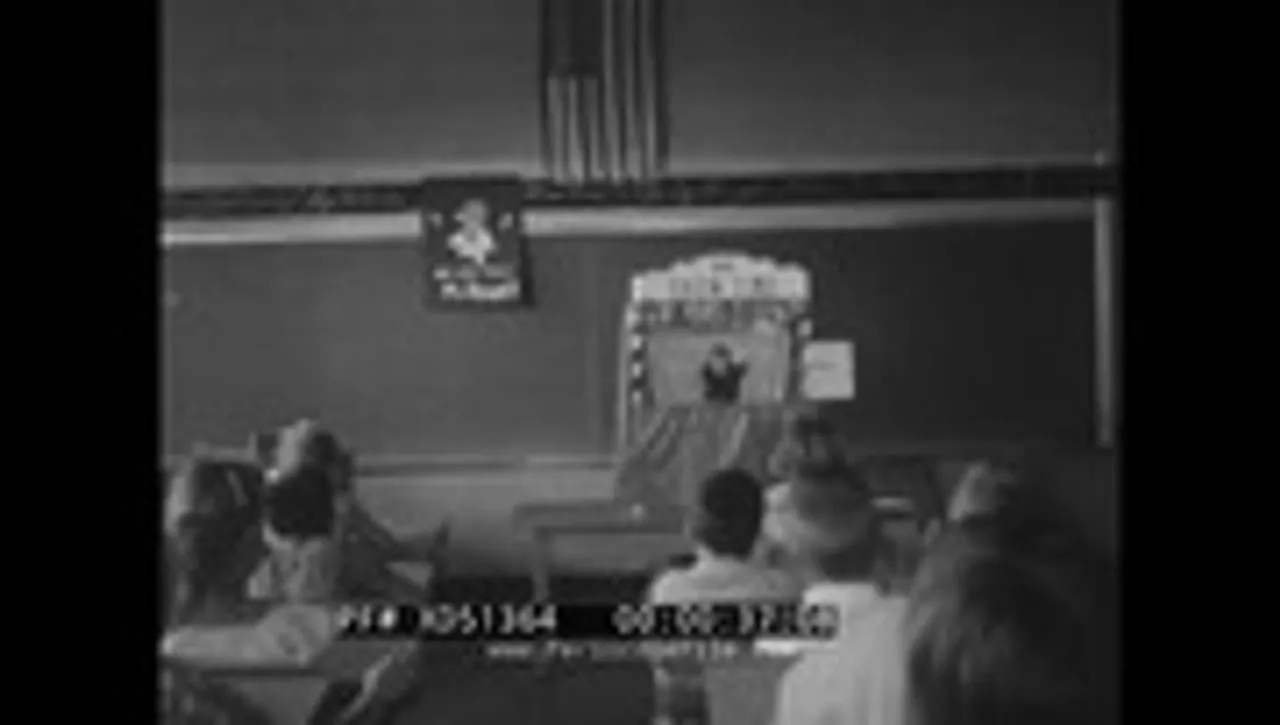
A puppet demonstrates poor cafeteria behavior — cutting in line, grabbing food, leaving a mess — before a well-behaved student models the correct routine: washing hands, waiting patiently, eating neatly, and clearing the table afterward.
Made by Coronet Films in consultation with education specialist Dr. Ross L. Allen, Lunchroom Manners is one of the more purely functional entries in the social-guidance catalog, aimed at grade-schoolers rather than teenagers, and its exaggerated puppet villain has made it a frequently excerpted example of the genre’s simplest, most literal teaching method.
Background
Lunchroom Manners — formally titled Beginning Responsibility: Lunchroom Manners — was produced by Coronet Films, a Chicago company that supplied thousands of short educational films to American schools from the 1940s through the 1980s, this one made in consultation with education specialist Dr. Ross L. Allen. Like most Coronet shorts, it was built around a single classroom problem, cafeteria behavior, and dramatizes the solution through a student named Phil, who watches both a bad example and a good one play out.
What to watch for
The bad example is a puppet named Mr. Bungle, whose cutting in line, grabbing of food, and general mess are exaggerated enough to be instantly legible to a young audience, before Phil models the correct routine of washing hands, waiting in turn, eating neatly, and clearing his own place afterward. Mr. Bungle later gave his name to the experimental rock band Mr. Bungle, a sign of how far this small classroom film eventually traveled outside its original audience; excerpts also turned up decades later on an HBO Pee-wee Herman special, part of a broader revival of interest in Coronet’s catalog as a strange, disconcertingly literal time capsule of postwar classroom discipline.