Kino Eye (1924)

Following a troop of Young Pioneers through markets, farms, and factories, Vertov's camera catches ordinary Soviet life unstaged and unrehearsed, then runs some of it backward, a bread loaf reassembling into grain, an ox rising from butchered meat, to make its point about how the eye can be extended.
Kino-Eye put Dziga Vertov’s theory of the camera as a “mechanical eye,” superior to and independent of human vision, into practice for the first time at feature length, laying the groundwork for the far more radical editing he’d bring to Man with a Movie Camera five years later.
Background
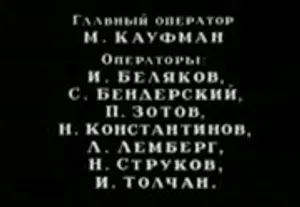
This was Vertov’s first feature-length work after his newsreel series Kino-Pravda, and its subtitle, “Life Caught Unawares”, states the aim. Vertov worked with his brother, the cameraman Mikhail Kaufman, and his wife, the editor Elizaveta Svilova; the three later called themselves the Council of Three. The Young Pioneers who tour the film’s markets and factories give the material a loose structure.
What to watch for
Vertov believed the camera saw more than the human eye could, and Kino-Eye tests that idea with tricks that were new at the time: film run backwards, so that a slaughtered ox reassembles itself and bread turns back into grain; slow motion; hidden-camera shots of people who do not know they are being filmed. Some of it is naive and some of it is propaganda, but it is a lively document of Moscow street life in the mid-1920s. It is best seen as the workshop for his later masterpiece.