Humoresque (1920)
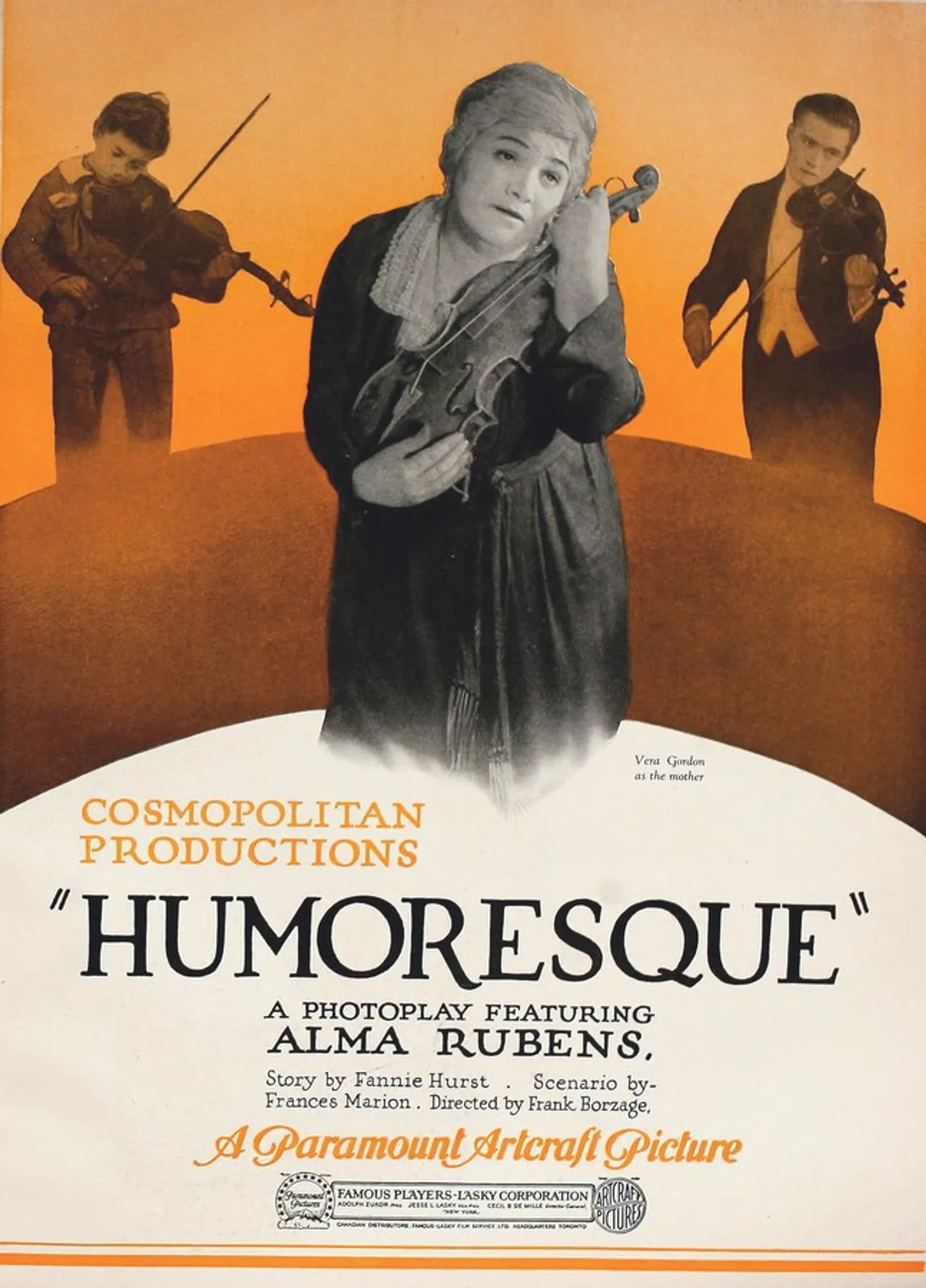
A poor Jewish family on New York's Lower East Side scrapes together the money for a violin, and their son Leon grows into a gifted concert player. He returns from the World War with an injured arm, and his mother's faith is tested as he fights to perform again.
A major popular success, Humoresque won the first Photoplay Medal of Honor, an early forerunner of the Best Picture Oscar; Frank Borzage’s tender handling of immigrant family life anticipates the romanticism of his sound-era work. It is preserved in the National Film Registry.
Background
Humoresque was adapted from a 1919 short story by Fannie Hurst and directed by Frank Borzage. Its story of a poor Jewish family on New York’s Lower East Side, whose son grows into a concert violinist, drew large audiences and won the first Photoplay Medal of Honor, an early award often described as a forerunner of the Academy Award for Best Picture. Gaston Glass plays the violinist, with Vera Gordon as his mother and Alma Rubens in a supporting role. The film is preserved as one of the notable popular dramas of the early 1920s.
What to watch for
The most affecting passages come from the family scenes, in which the mother’s faith and sacrifice carry as much weight as the son’s music. Borzage stages the home with tenderness and clear, warm detail, and the film attends to the family’s poverty without turning it into spectacle. The violinist’s injured arm, after his return from the First World War, sets up the central test of the story: whether his mother’s faith can survive his fight to perform again. Borzage’s gentle handling of immigrant family life is an early sign of the romanticism that marked his later work.