Easy Virtue (1928)
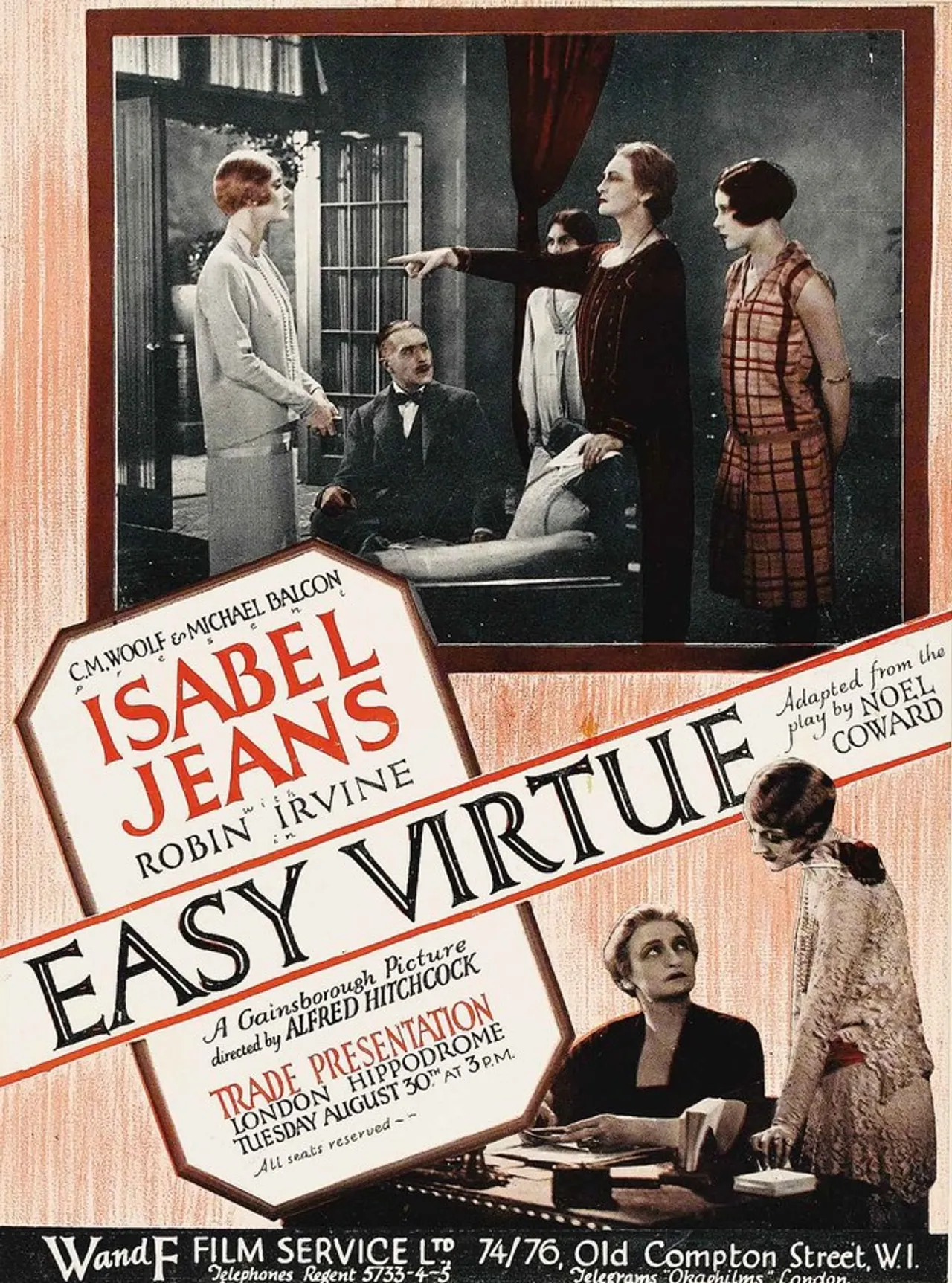
Wrongly branded an adulteress in her abusive husband's divorce case, Larita Filton rebuilds her life under a new identity on the Riviera and marries into a respectable family, only for her scandalous past to resurface and threaten to ruin them both.
Adapted from a Noël Coward play, Easy Virtue is a minor entry from Hitchcock’s silent years, notable mainly for an early flash of his visual wit — a wordless courtroom scene told entirely through a switchboard operator’s face — rather than for the melodrama around it.
Background
Easy Virtue was directed by Alfred Hitchcock in 1928 and adapted from Noel Coward’s 1924 play. Isabel Jeans stars as Larita Filton, a woman wrongly branded an adulteress in her first marriage, who rebuilds her life under a new identity. The film is one of Hitchcock’s silent features and was made while he was developing his craft in the British film industry. Franklin Dyall, Ian Hunter, and Robin Irvine are also in the cast. The melodrama follows the play’s central premise closely.
What to watch for
Watch the film’s courtroom scene, which is told largely without dialogue and shows Hitchcock’s early visual wit. The reactions of a switchboard operator carry much of the scene’s humor and drama, and the sequence is the film’s most cited visual moment. The melodrama around the lead’s scandal is more conventional, so the film’s strength lies in the way Hitchcock stages reaction and implication. Isabel Jeans’s performance gives the drama its emotional center as her past resurfaces. Viewers interested in Hitchcock’s development should note how the silent format pushes the story toward visual storytelling rather than the dialogue of the original play.