Becky Sharp (1935)
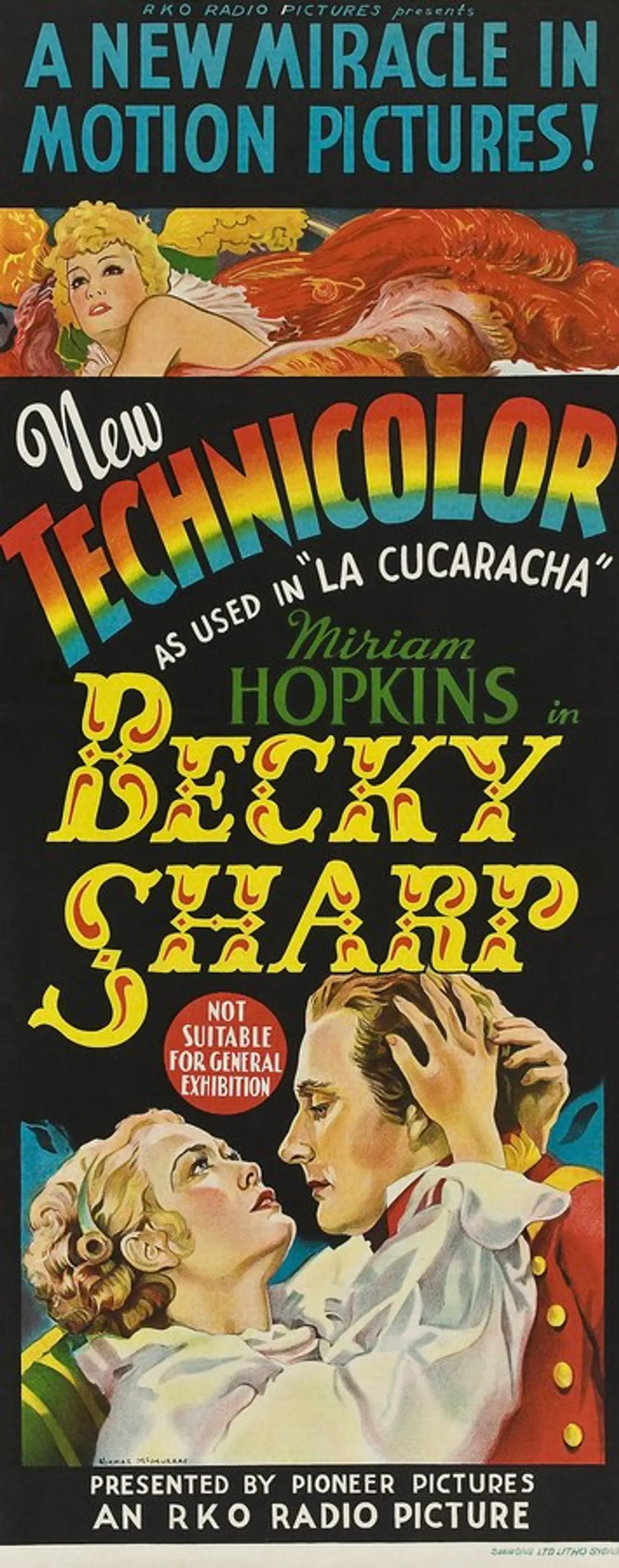
Ambitious and penniless, Becky Sharp schemes her way through Napoleonic-era British society, using charm and calculation to climb from governess to the drawing rooms of the wealthy, leaving ruined reputations in her wake.
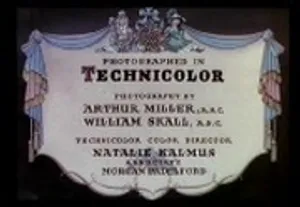
Becky Sharp holds a firm place in film history as the first feature shot entirely in three-strip Technicolor, a technical gamble that nearly stalled after original director Lowell Sherman died mid-production and Rouben Mamoulian took over to finish it.
Background
Rouben Mamoulian directed Becky Sharp for RKO in 1935, adapting Thackeray’s Vanity Fair with Miriam Hopkins in the title role. It was the first feature shot entirely in three-strip Technicolor, a process that had previously been used mainly for short subjects and sequences, so the production was a technical gamble for the studio. Original director Lowell Sherman died during the shoot in 1934, and Mamoulian took over to complete the film. Its color design, which emphasizes costume and set detail, is a key reason it is still studied in film history.
What to watch for
Color is the first thing to notice. Costumes, interiors and Napoleonic-era settings are composed with saturated, deliberate palettes, and Mamoulian uses color to shape moods rather than simply display it. Hopkins plays Becky as a calculating social climber whose charm is also a weapon, and the film keeps her ambiguous rather than fully condemning her. The restraint of the dialogue scenes lets the color carry much of the storytelling, so pay attention to how the palette changes as Becky’s fortunes rise and fall.