A Corner in Wheat (1909)
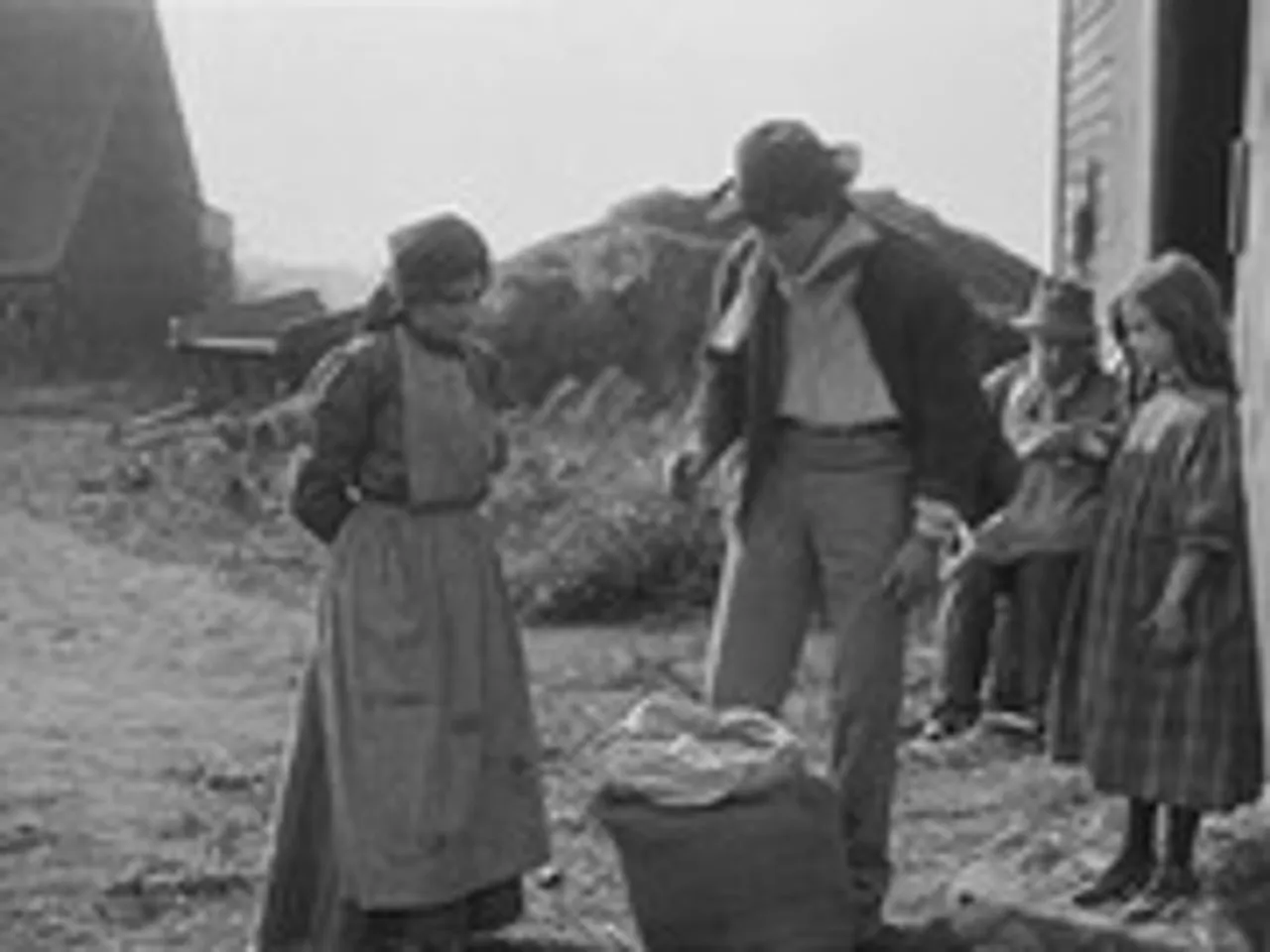
A wheat speculator corners the grain market and grows rich as bread prices soar, his lavish banquet cut against scenes of bakery riots and a farming family driven to ruin, before he meets his end buried alive in his own grain elevator.
A Corner in Wheat was D. W. Griffith’s first overtly political film, drawing on Frank Norris’s fiction and the real-life wheat speculator James A. Patten to build its parallel editing between gluttony and hunger — an early template for the social-conscience filmmaking Griffith would return to throughout his career.
Background
D. W. Griffith made A Corner in Wheat for Biograph in 1909, drawing on Frank Norris’s short story ‘A Deal in Wheat’ and his novel The Octopus, along with the real grain speculator James A. Patten. The film sets a lavish banquet for the speculator beside scenes of bread lines and a farming family ruined by falling prices, a contrast built through parallel editing. Billy Bitzer’s camera work supports the argument, and the film is one of Griffith’s earliest pointed social dramas. It was later added to the National Film Registry.
What to watch for
The key to the film is its alternation between the speculator’s feast and the hungry crowds outside, with the cuts sharpening the contrast rather than explaining it. Griffith uses close framing and quick shifts between rich and poor to make his argument visually, a method he kept using in later social dramas. The ending, in which the speculator is buried under the grain he hoarded, is blunt and deliberately symbolic. Watch how Griffith stages it, since the film leans on image rather than dialogue to make its point.