
Building the Kino-Eye
Three trial runs and the 1929 landmark they were all pointing toward — Dziga Vertov's theory of the camera as a mechanical eye, built one Soviet documentary at a time.
-

Kino Eye
-
 1h 14m
A Sixth Part Of The World
-
The Eleventh Year
- Advertisement
-
 1h 8m
Man with a Movie Camera
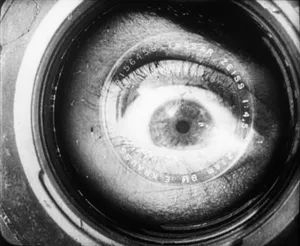
Every one of these films is, by the site’s own account, a rehearsal for the next. Kino-Eye put Dziga Vertov’s theory of the camera as a “mechanical eye” — superior to, and independent of, human vision — into practice for the first time at feature length, following Young Pioneers through markets and factories and running some of the footage backward to make its point. A Sixth Part of the World, commissioned as trade-promotion propaganda for the Soviet export agency, oversteps its brief into a globe-spanning montage of Arctic reindeer herders, Central Asian camel traders, and Black Sea fishing crews — and overran its budget so badly that Vertov was expelled from Sovkino for it, though the method pointed straight at what came next. The Eleventh Year narrows back to a single subject, the Dnieper hydroelectric dam under construction alongside archaeologists uncovering ancient Scythian tombs on the same land, and was Vertov’s dry run for the editing techniques he’d refine a year later. Then comes Man with a Movie Camera: no actors, no titles, no story, just a cameraman running, climbing, and lying under trams to catch one day in a Soviet city, assembled with the split screens, freeze frames, and dizzying cuts the other three films had quietly been building toward. Watch them in order and you’re watching a filmmaker teach himself, on camera, how to make his masterpiece.