The Vagabond (1916)
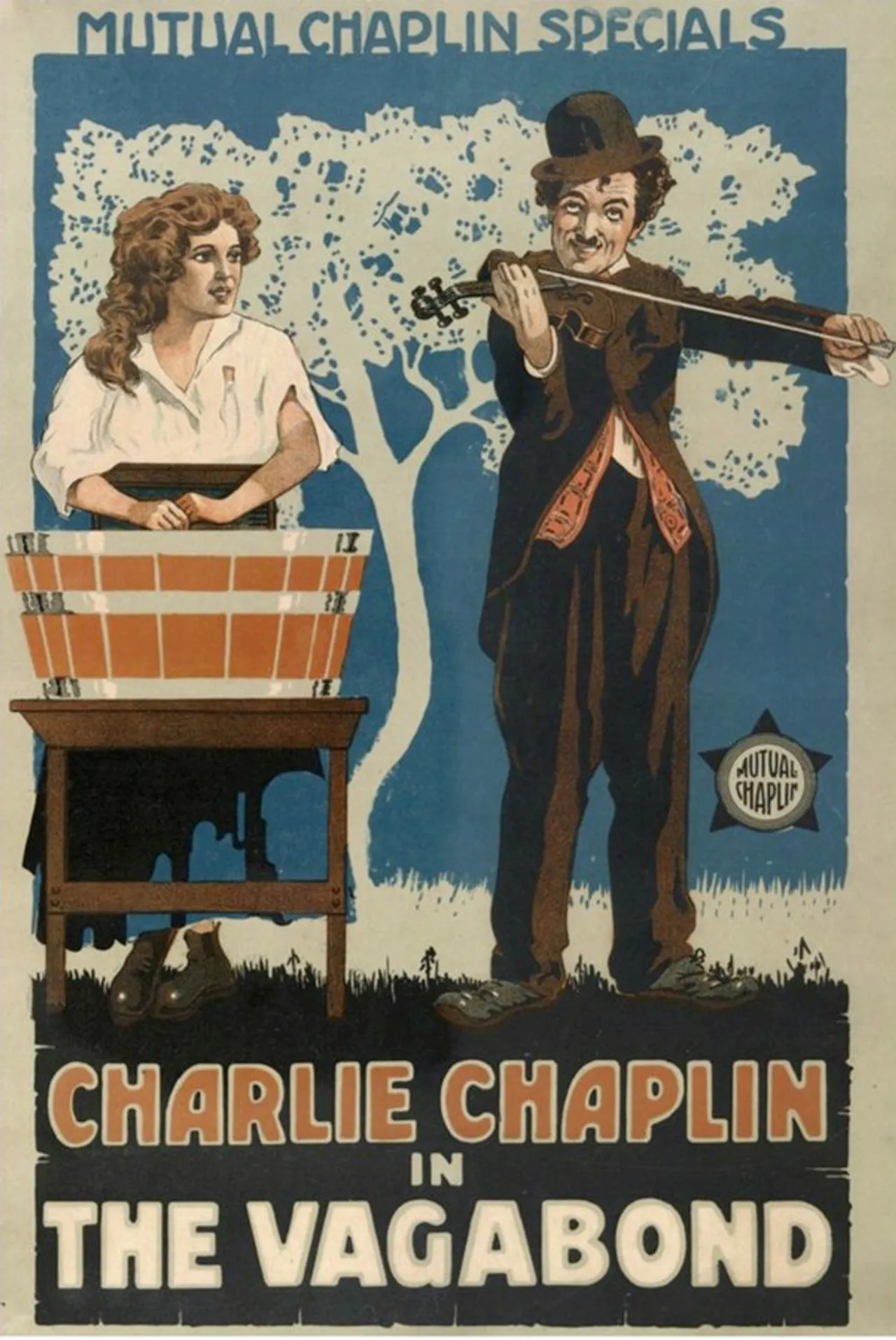
A street violinist rescues a gypsy girl from her abusive caretakers and cares for her on the road, then must step aside when her wealthy birth family reclaims her and a painter rival wins her affection.
The Vagabond was Chaplin’s third film for Mutual and marked a tonal shift toward genuine pathos, ending not with a joke but with the Tramp losing the girl — a bittersweet note that became a recurring signature of Chaplin’s mature work.
Background
The Vagabond was the third film Chaplin made for Mutual, and it marks a notable shift in tone from the broader slapstick of his earlier work toward something closer to genuine pathos. The story follows a street violinist who rescues a young gypsy girl from her abusive caretakers and cares for her on the road, only to lose her once her wealthy birth family reclaims her and a rival wins her affection.
What to watch for
Watch for the film’s ending, which closes not on a joke but on the Tramp quietly losing the girl he loves, a bittersweet note that would become a recurring signature of Chaplin’s more mature work in the years that followed. It is a useful film for seeing how early in his career Chaplin began experimenting with blending comedy and real emotional loss, well before his feature-length dramas made that combination central to his reputation.