The Trail Beyond (1934)
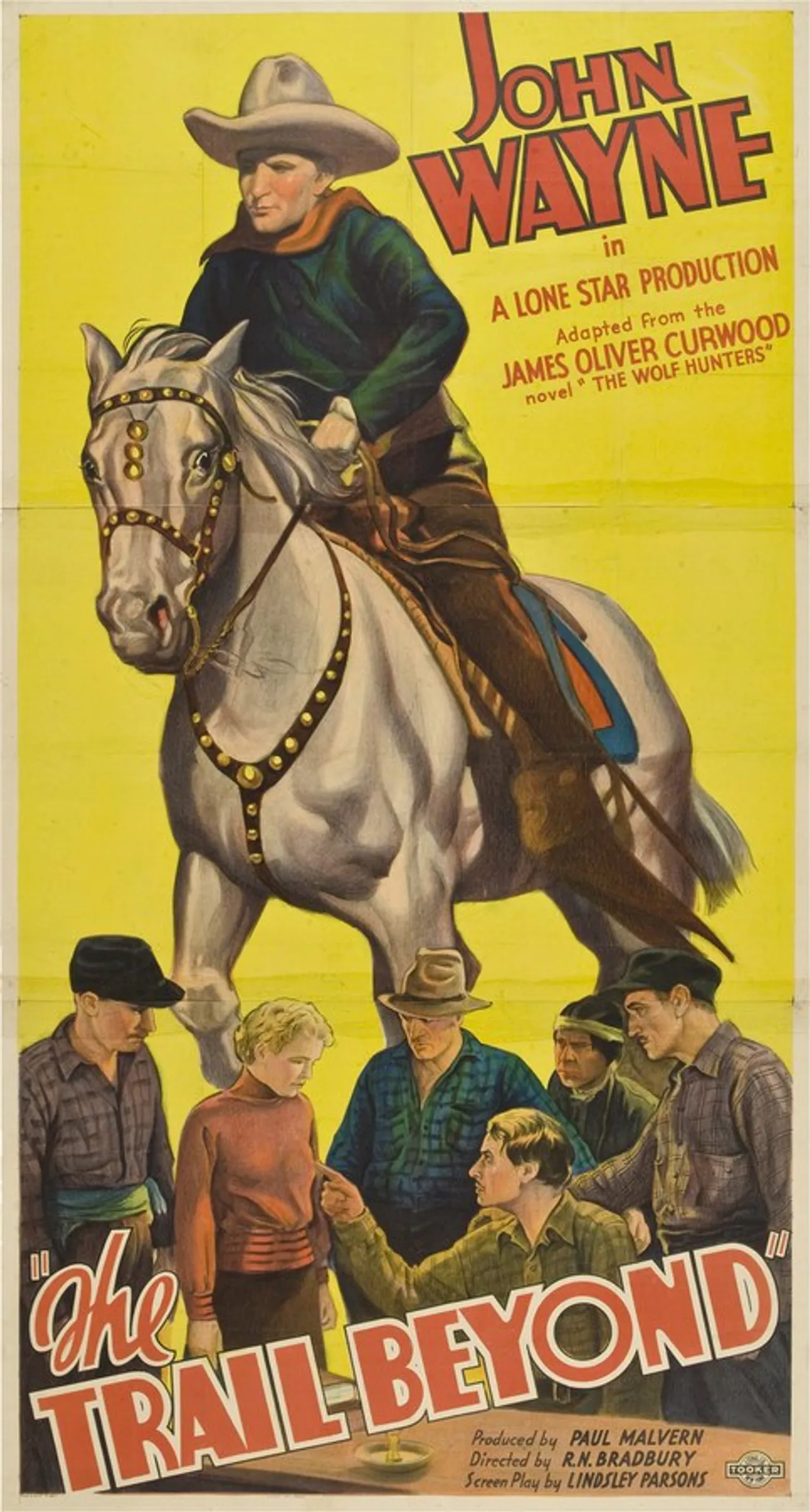
Adventurer Rod Drew heads into the Canadian wilderness with a map to a hidden gold mine and stumbles onto a young woman long lost to her family, fighting off a renegade trapper's gang for both the gold and her safety.
Adapted from a James Oliver Curwood adventure novel and shot amid the pines and lakes of the Sierra Nevada rather than Monogram’s usual dusty backlot, The Trail Beyond trades the cattle-rustling formula of its stablemates for a snowbound gold-rush yarn — a rare change of scenery for Wayne’s Lone Star run.
Background
The Trail Beyond was directed by Robert N. Bradbury for Monogram, released October 22, 1934, with a screenplay by Lindsley Parsons and cinematography by Archie Stout. It was adapted from James Oliver Curwood’s novel The Wolf Hunters, which supplied the Canadian wilderness setting unusual for a Wayne B-western of the period. Wayne plays Rod Drew, who heads north with a map to a hidden gold mine and ends up searching for a young woman long missing from her family, with Noah Beery Sr. and Noah Beery Jr. both appearing in the supporting cast.
What to watch for
The production swapped Monogram’s usual dusty Southern California backlot for the pines and lakes around the Sierra Nevada, giving the film a snowbound, northern-frontier look its stablemates rarely attempted. The plot folds together a missing-person search, a renegade trapper’s gang, and a buried-gold subplot drawn from Curwood’s novel, trading the cattle-rustling formula that filled out most of Wayne’s Lone Star pictures for something closer to an outdoor adventure yarn. At a brisk 55 minutes, it moves through all three strands quickly, relying on the change of scenery as much as plot mechanics to stand out.