Sagebrush Trail (1933)
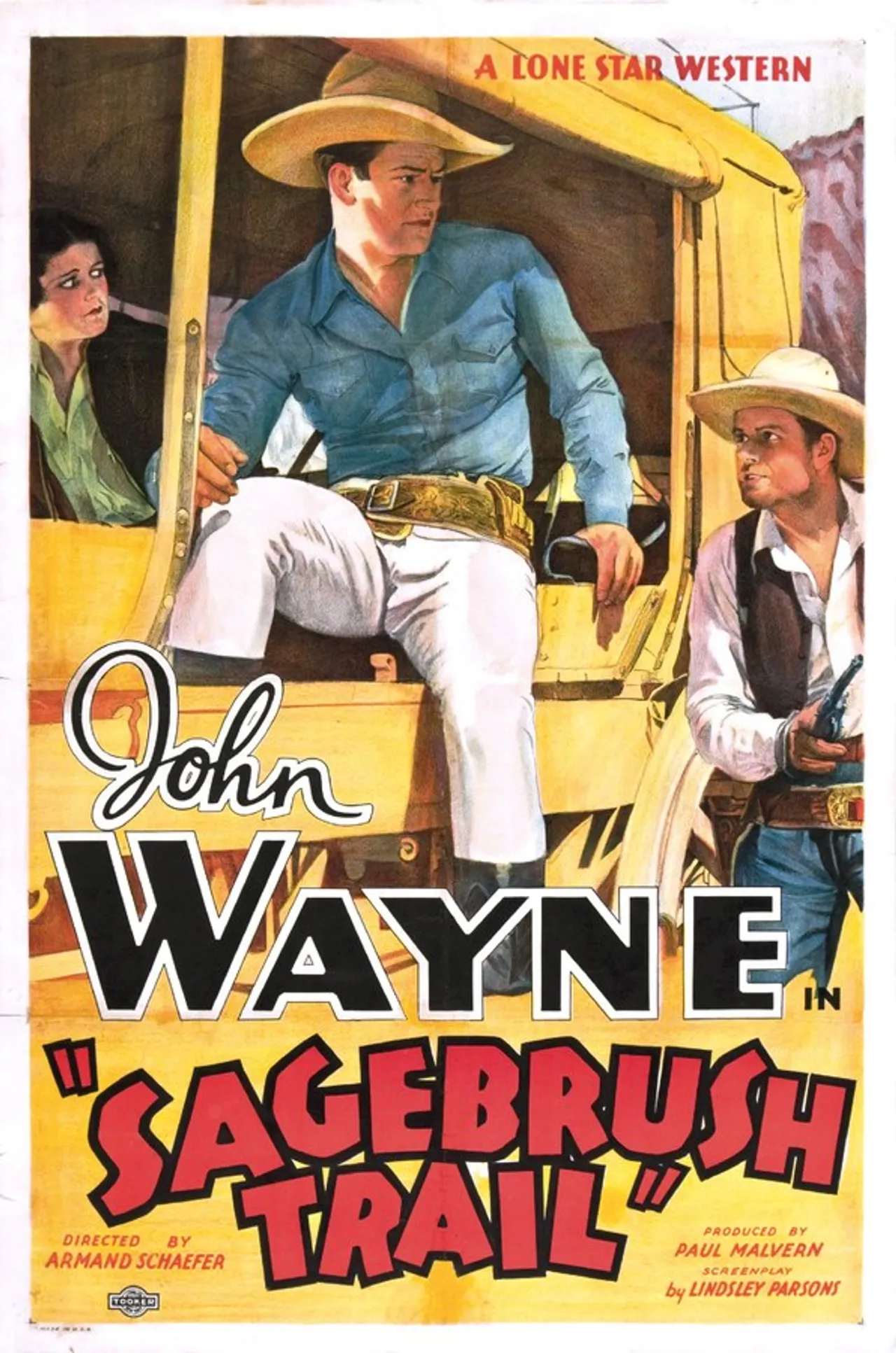
Escaped convict John Brant, wrongly condemned for murder, infiltrates an outlaw gang under a false name to track down the real killer in its ranks, clearing his name only after a fellow gang member's late confession forces the truth into the open.
Shot in a matter of days on the same Bronson Canyon outcrops that stood in for a dozen other Poverty Row ranges, Sagebrush Trail is most notable now for pairing Wayne with stuntman Yakima Canutt, whose horse falls and fight choreography would go on to define screen Western action for decades.
Background
Sagebrush Trail was John Wayne’s second picture for Monogram Pictures, one of a string of low-budget westerns he made for the Poverty Row studio in the early 1930s. Directed by Armand Schaefer from a script by Lindsley Parsons and Will Beale, and shot by cinematographer Archie Stout, it was released on December 15, 1933, with Wayne cast as John Brant, a man wrongly wanted for murder who escapes custody by hiding underwater and breathing through a reed. Posing under a false name, Brant joins the very outlaw gang sheltering the real killer, working from inside to expose him before the law catches up with either man.
What to watch for
Sagebrush Trail was shot quickly on the Bronson Canyon outcrops that doubled for dozens of other low-budget westerns of the period, and its chief interest today is the pairing of Wayne with stuntman Yakima Canutt, who also plays the outlaw gang’s leader. Canutt’s horse falls and fight staging, developed across films like this one, became the template other Hollywood westerns followed for decades. Watching the film alongside Wayne’s other 1933 Monogram pictures also shows how quickly the young actor was cycling through interchangeable plots and settings before his career-defining work later in the decade.