Manhatta (1921)
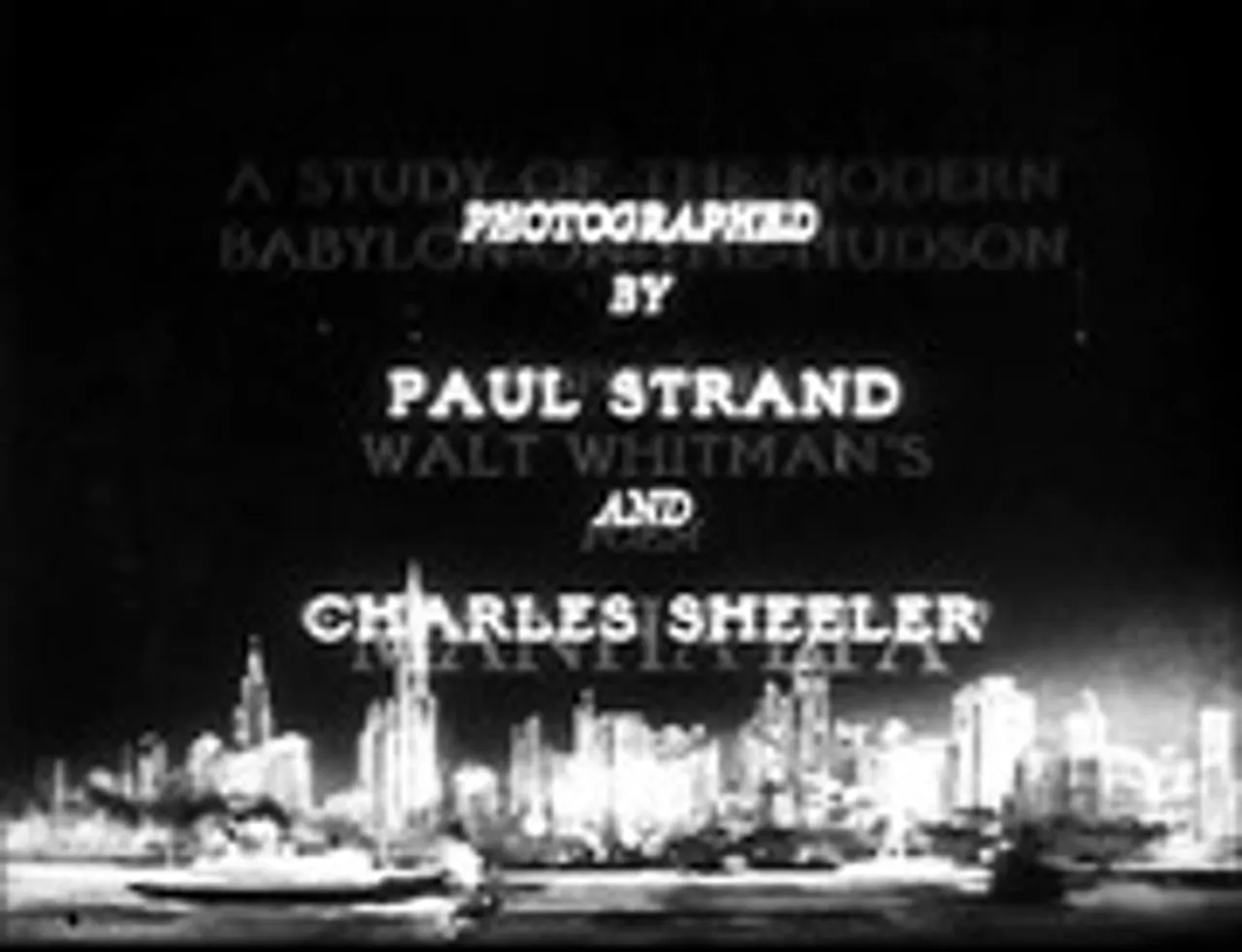
A silent city symphony built from sixty-five carefully composed shots of Manhattan, opening with a ferry crossing and closing on a skyline sunset, its images intercut with lines drawn from Walt Whitman's poetry.
Manhatta is often called the first American avant-garde film, painter Charles Sheeler and photographer Paul Strand applying a still photographer’s eye for abstraction and geometry to the moving image, years ahead of the city-symphony films it anticipated in Europe.
Background
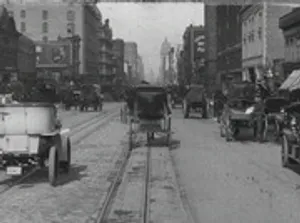
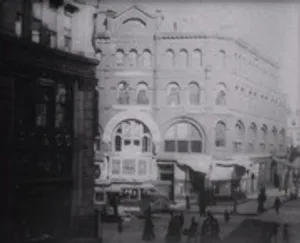
Manhatta is a short, largely plotless film built from a series of carefully composed shots of Manhattan, made by the painter and photographer Charles Sheeler together with photographer Paul Strand. Its images, of ferries, skyscrapers, and city streets, are intercut with lines drawn from Walt Whitman’s poetry, giving the film a lyrical rather than narrative structure. It is often cited as one of the earliest American avant-garde films.
What to watch for
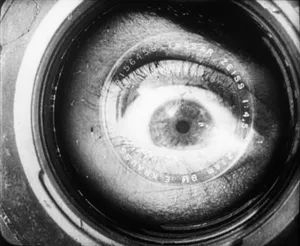
Watch for the compositions themselves: Sheeler and Strand approach the city the way still photographers of the period were exploring abstraction and geometric form, favoring striking angles and patterns of light and shadow over documentary description. The film anticipates the “city symphony” genre of urban documentaries that would flourish in Europe later in the decade, and it is a useful point of comparison if you also watch Dziga Vertov’s Man with a Movie Camera, made several years later with a very different, more kinetic approach to similar subject matter.