Dementia (1955)
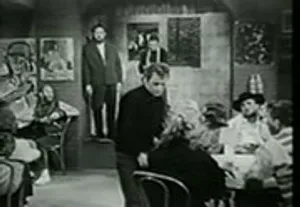
A nameless woman drifts through Los Angeles's skid row after dark, her fractured memories of killing her abusive father resurfacing as she is stalked, propositioned, and ultimately drawn into a fatal confrontation with a wealthy stranger.
Shot with no spoken dialogue, Dementia builds its nightmare entirely from George Antheil’s score and expressionist camerawork; New York’s state censors banned it in 1955 as “inhuman,” a notoriety that helped make it a midnight-movie curio decades later under its reissue title, Daughter of Horror.
Background
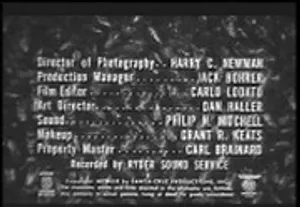
Dementia was written and directed by John Parker and released in 1955 as an independent production; it later circulated under the title Daughter of Horror. The film was shot with no spoken dialogue, and its soundtrack relies on George Antheil’s score. Adrienne Barrett plays the nameless woman at the center of the story, and Bruno VeSota appears in the cast. New York’s state censors banned the film in 1955, calling it ‘inhuman’, and that ban added to its later notoriety on the midnight-movie circuit.
What to watch for
The nightmare is built from expressionist camerawork, high-contrast lighting, and the score rather than from dialogue. Barrett’s protagonist drifts through a Los Angeles skid row, and her fractured memories of the past surface as she is stalked and propositioned. Watch how the film uses shadows, distorted framing, and repeated images to convey her state of mind. The climactic confrontation with a wealthy stranger ties the earlier scenes together. Because the film has no dialogue, its performance and staging carry all of the meaning, which is why it still draws attention from viewers interested in experimental horror.