Beat the Devil (1953)
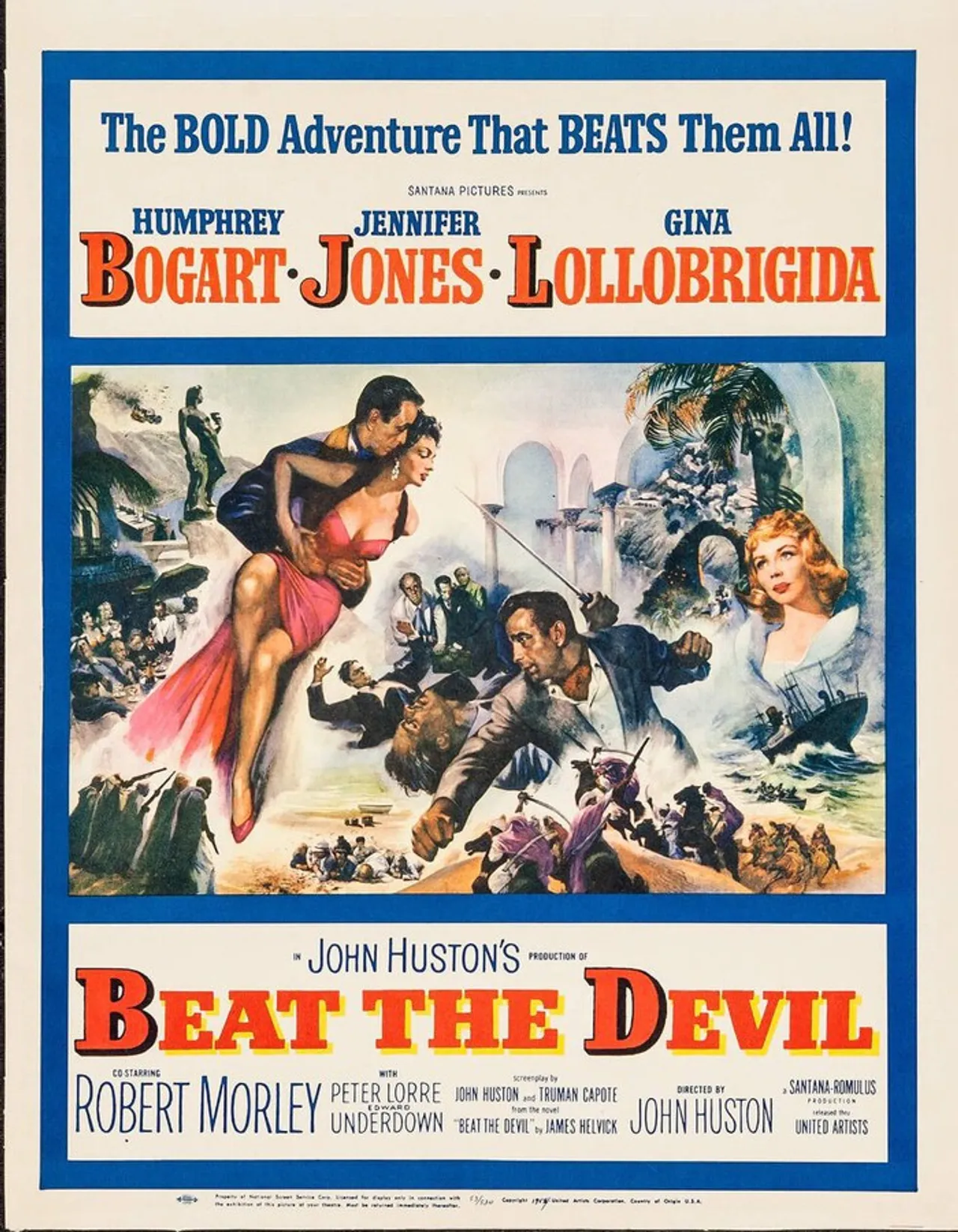
Stranded in an Italian port while their steamer is repaired, a quartet of shabby crooks wait to reach East Africa and the uranium-rich land they mean to grab. The scheme unravels as Bogart's fixer, his wife, and a compulsively lying Englishwoman trade affairs and double-crosses on the way to Mombasa.
John Huston and Truman Capote wrote the script scene by scene during filming, turning a straight adventure novel into a deadpan send-up of Huston’s own The Maltese Falcon. A flop on release, Beat the Devil became a revival-house favorite and is often called the first camp movie; only the original theatrical cut is in the public domain, not Sony’s later restoration.
Background
John Huston directed Beat the Devil in 1953 from a novel by Claud Cockburn, published under the name James Helvick. Huston and Truman Capote wrote the screenplay largely during the shoot, scene by scene, and the production was filmed in Italy. Humphrey Bogart, Jennifer Jones, Gina Lollobrigida and Peter Lorre play a mismatched group of would-be crooks waiting in an Italian port. The film was a commercial disappointment on release, but it became a cult favorite and is often described as an early camp film. Its send-up of Huston’s own The Maltese Falcon (1941) is part of why it has lasted.
What to watch for
Bogart plays the fixer with a wry, weary edge that the film frequently plays against, and the performances are pitched at a sly, theatrical level that is deliberately uneven. Notice how the story keeps changing its own rules, with relationships and identities shifting as the characters double-cross one another on the way toward Mombasa. The Italian settings give the film a travelogue look that the characters seem unable to enjoy, and the improvised feel of the writing is part of the charm for viewers who know how it was made.